With the Naadam Games and our day tour outside the city both behind us, today was another day to get to become better acquainted with UB, as the locals abbreviate Ulaanbaatar. The day was intended to have four parts: a visit to an historical site, a chance to see the city from a high point of land, a visit to an art gallery to enhance our cultural understanding of Mongolia, and, to Pam’s delight, some shopping time — which I am infamous for not building into our international tours! The day was relaxing, and we accomplished all four goals. We took things at a leisurely pace when we woke, enjoyed the Aurora Hotel’s decent breakfast buffet, did some blogging, and then set out at 11AM. With a temperature reaching a max of 20C, it was just right for seeing the sights. A delicious dinner was had back at the hotel.
Winter Palace of the Bogd Khan
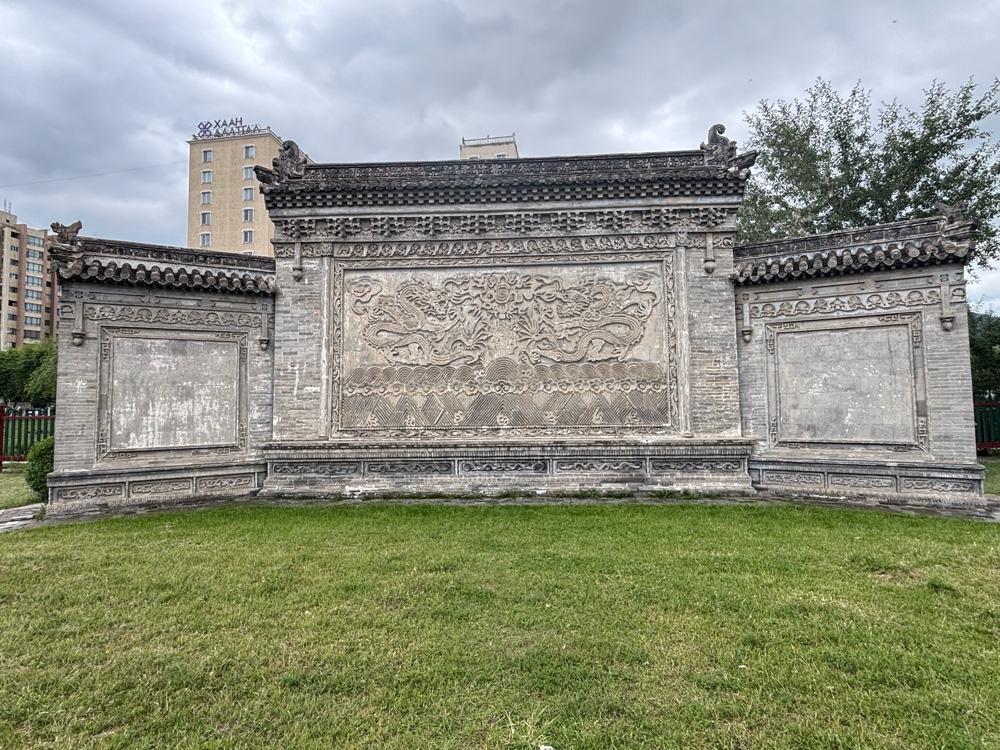
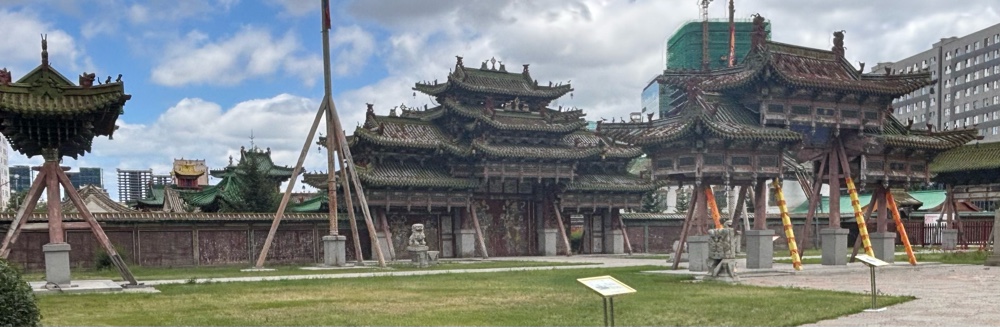
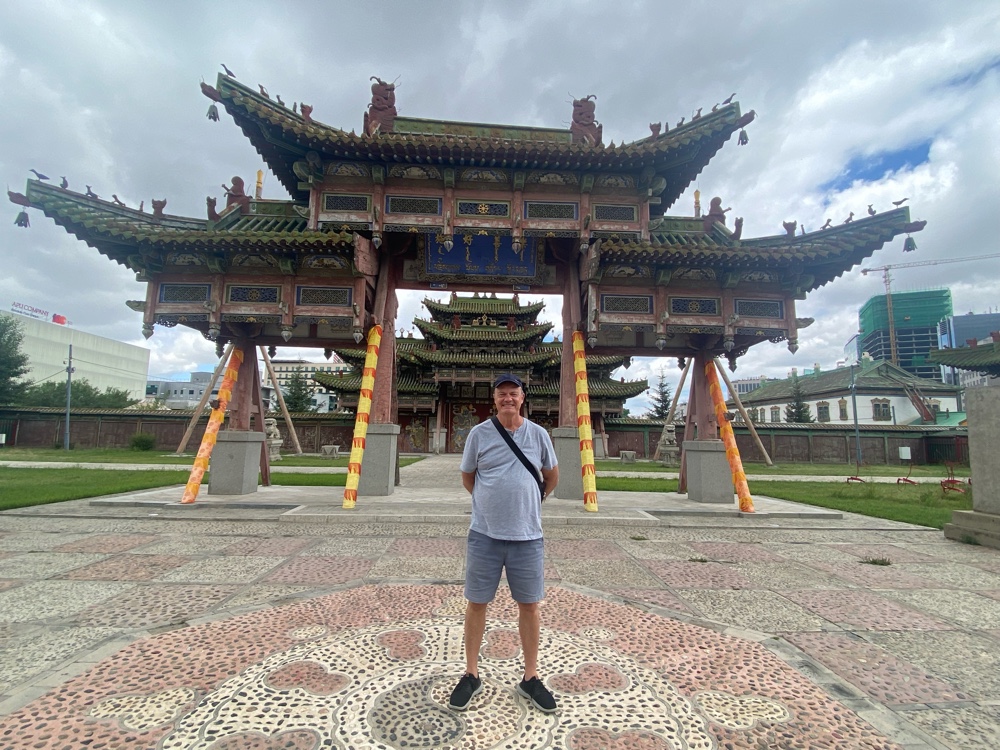
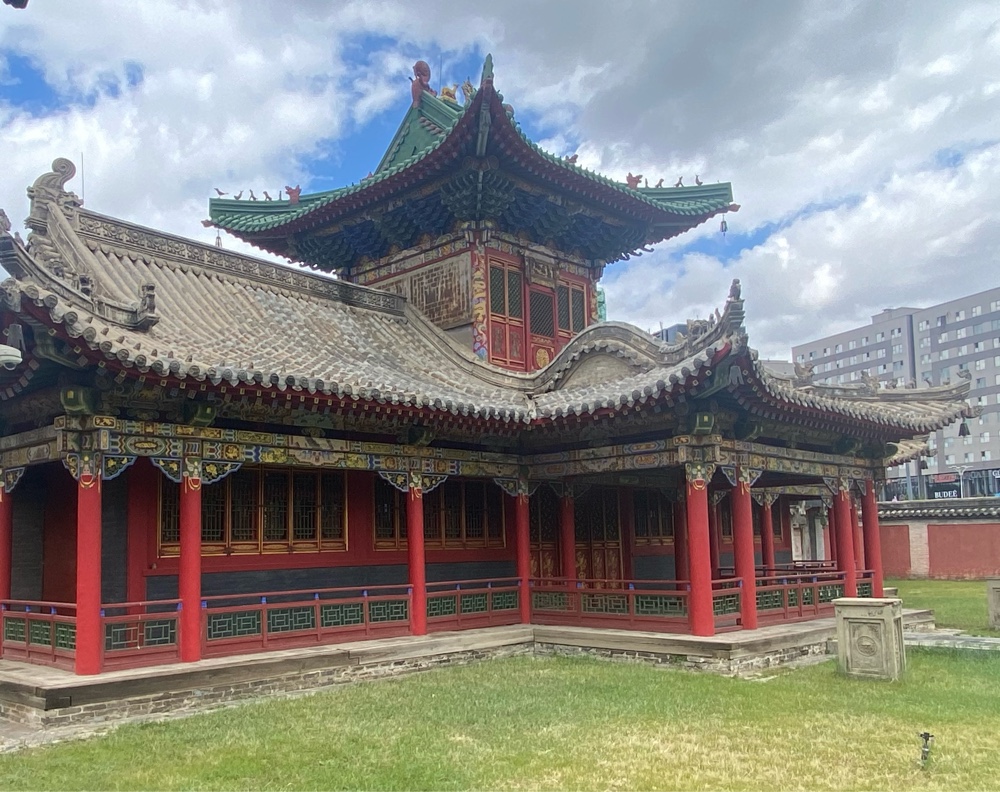
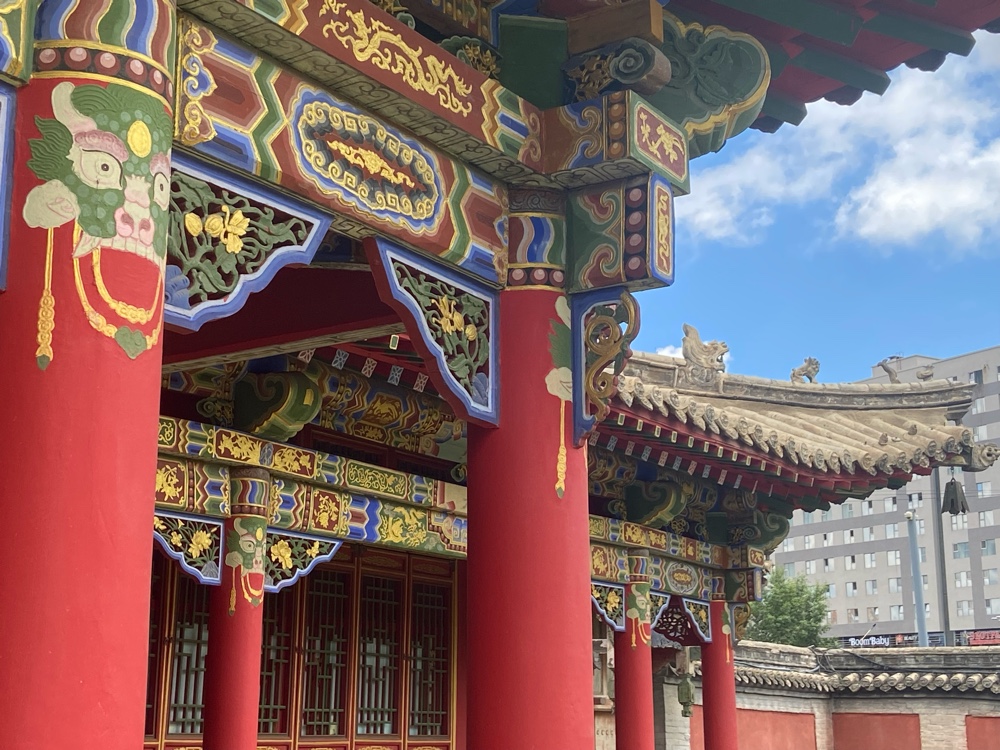
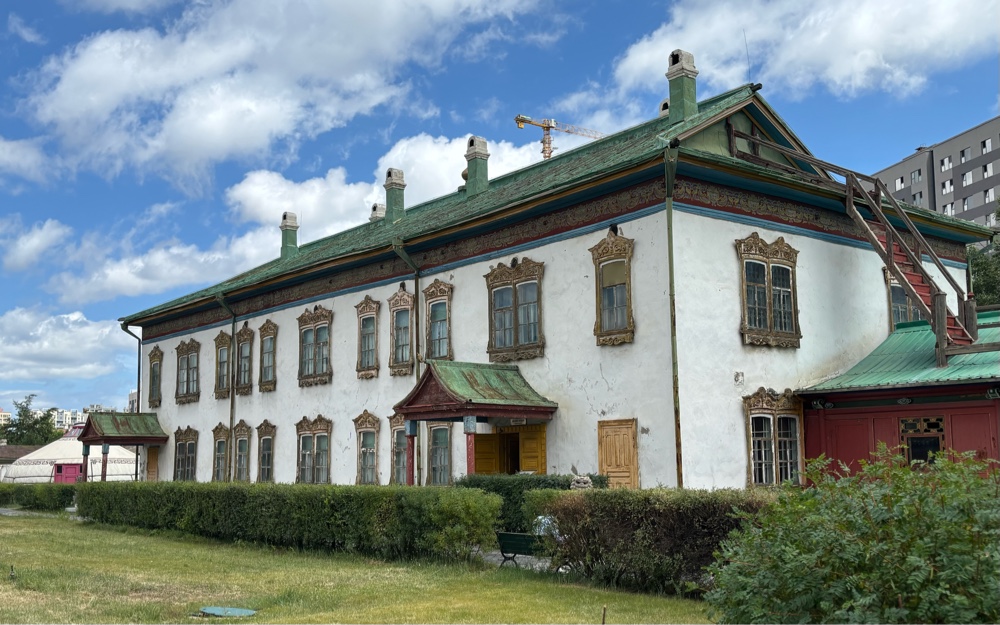
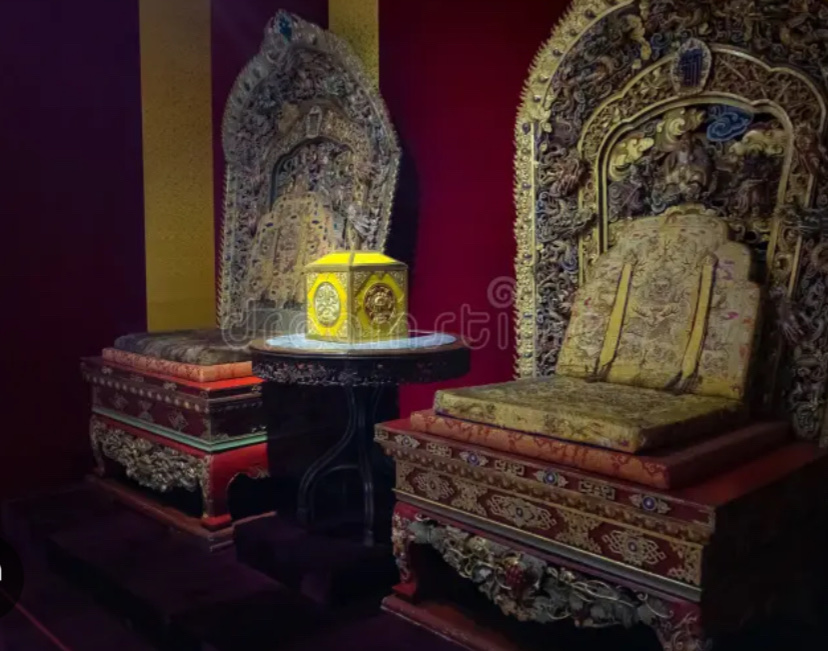
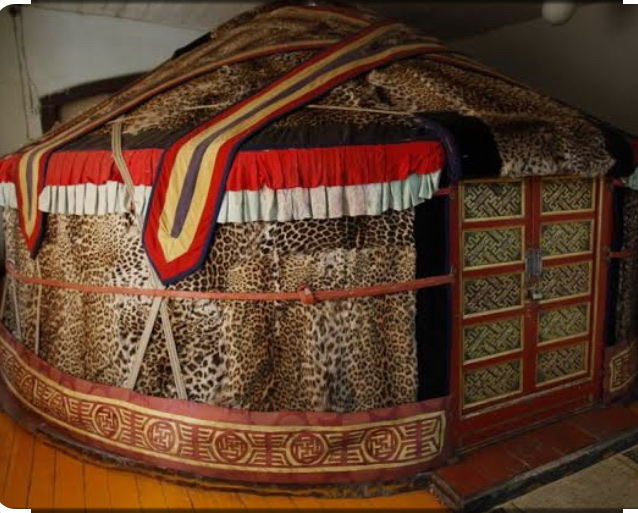
This is the only surviving residence of the country’s last theocratic ruler, who died in 1924. It features a two-storey Russian-built winter palace and six ornate Chinese-style summer temples. The residence is the only one of four remaining for the Bogd Khan (king). It was built between 1893 and 1903. There are over 8000 royal artefacts in the collection, some of which are truly impressive. Sadly, photo rights would have cost us a lung, so we only have two pics from the Internet to share.
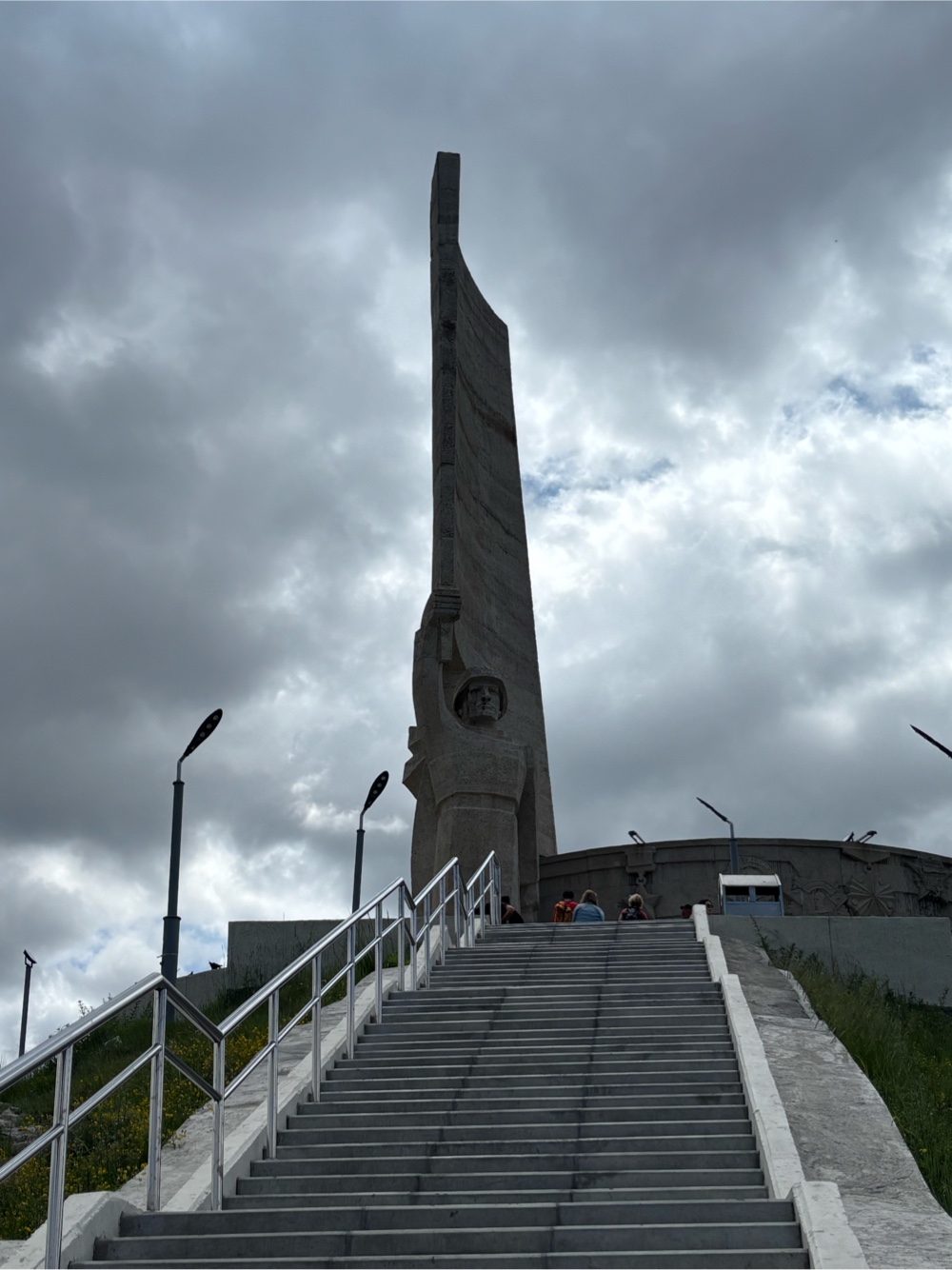
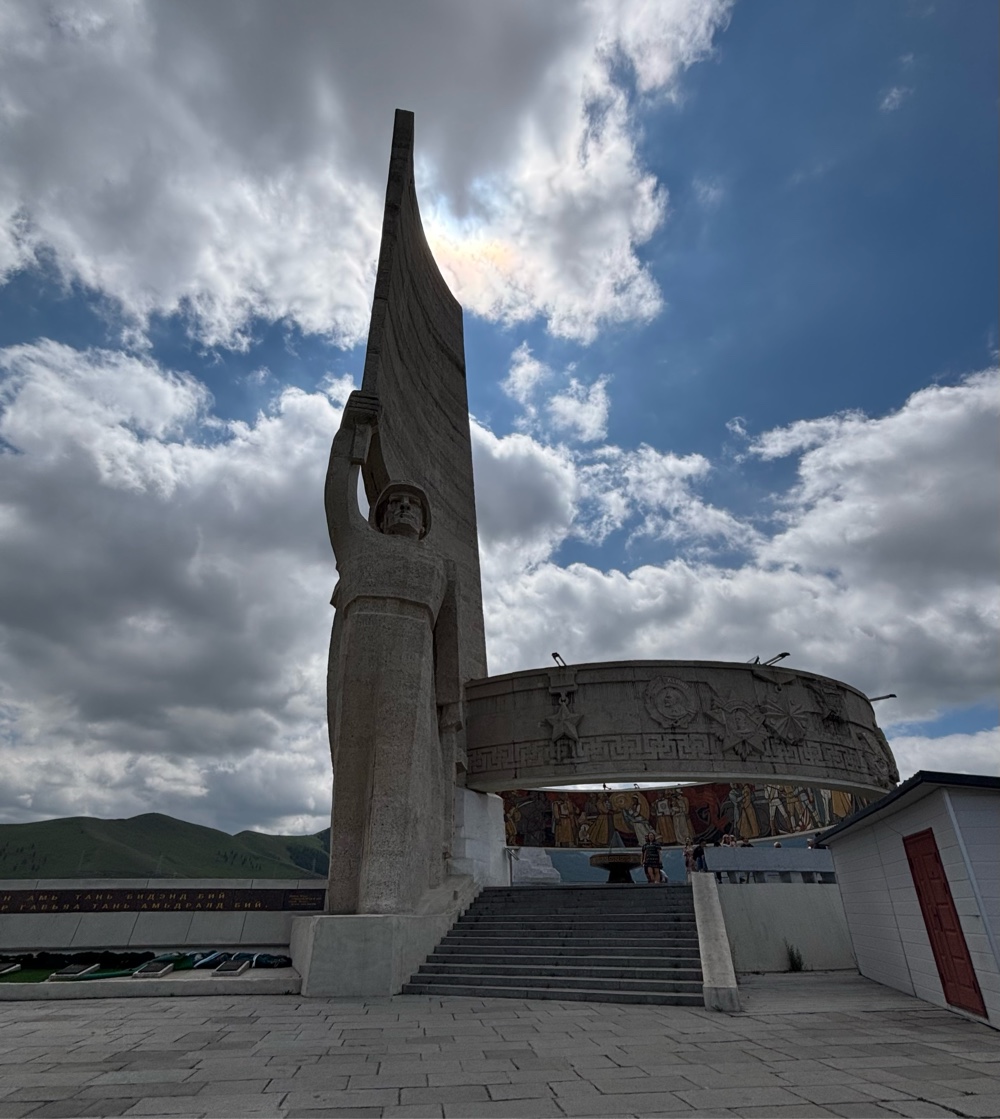
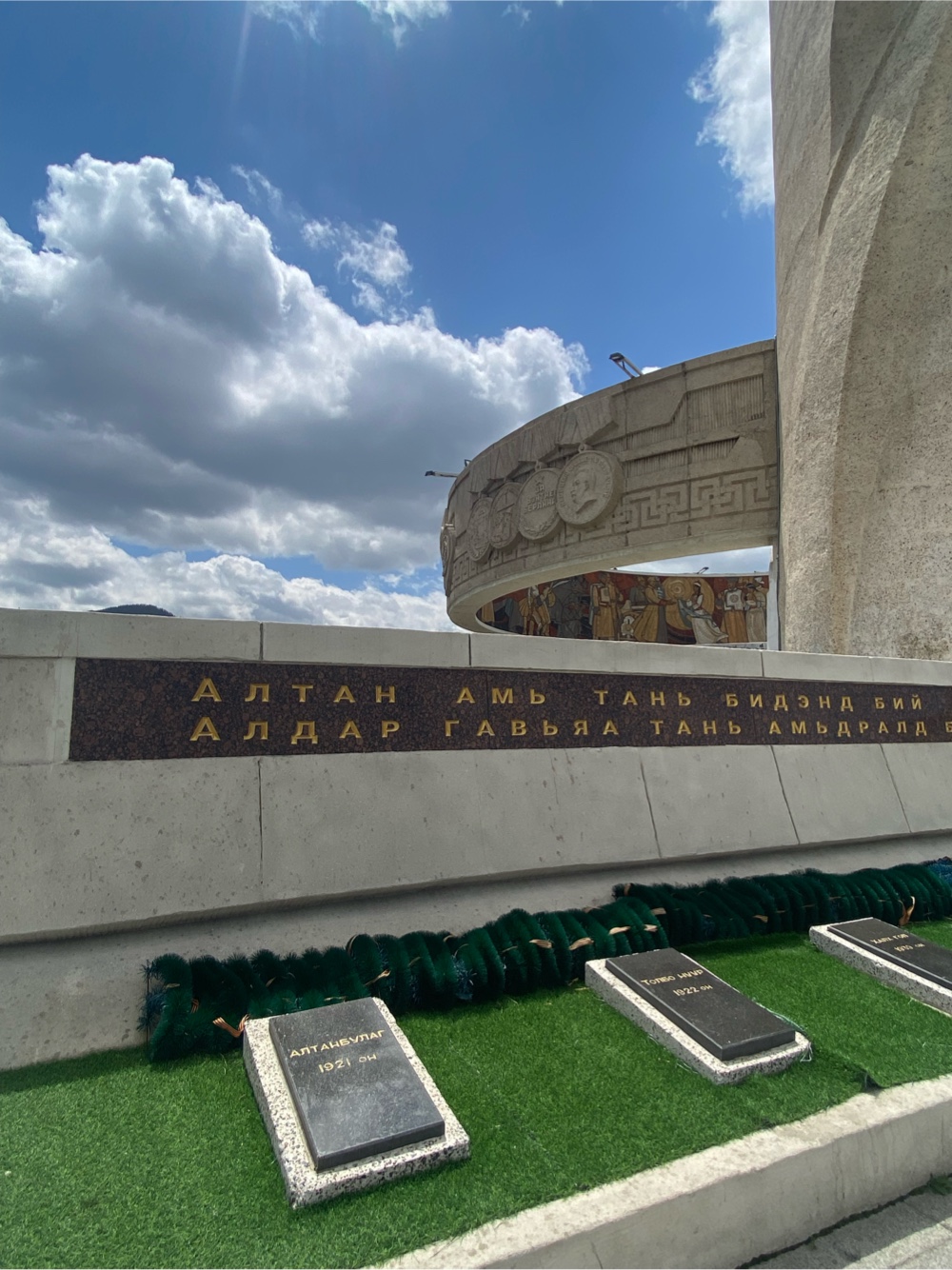
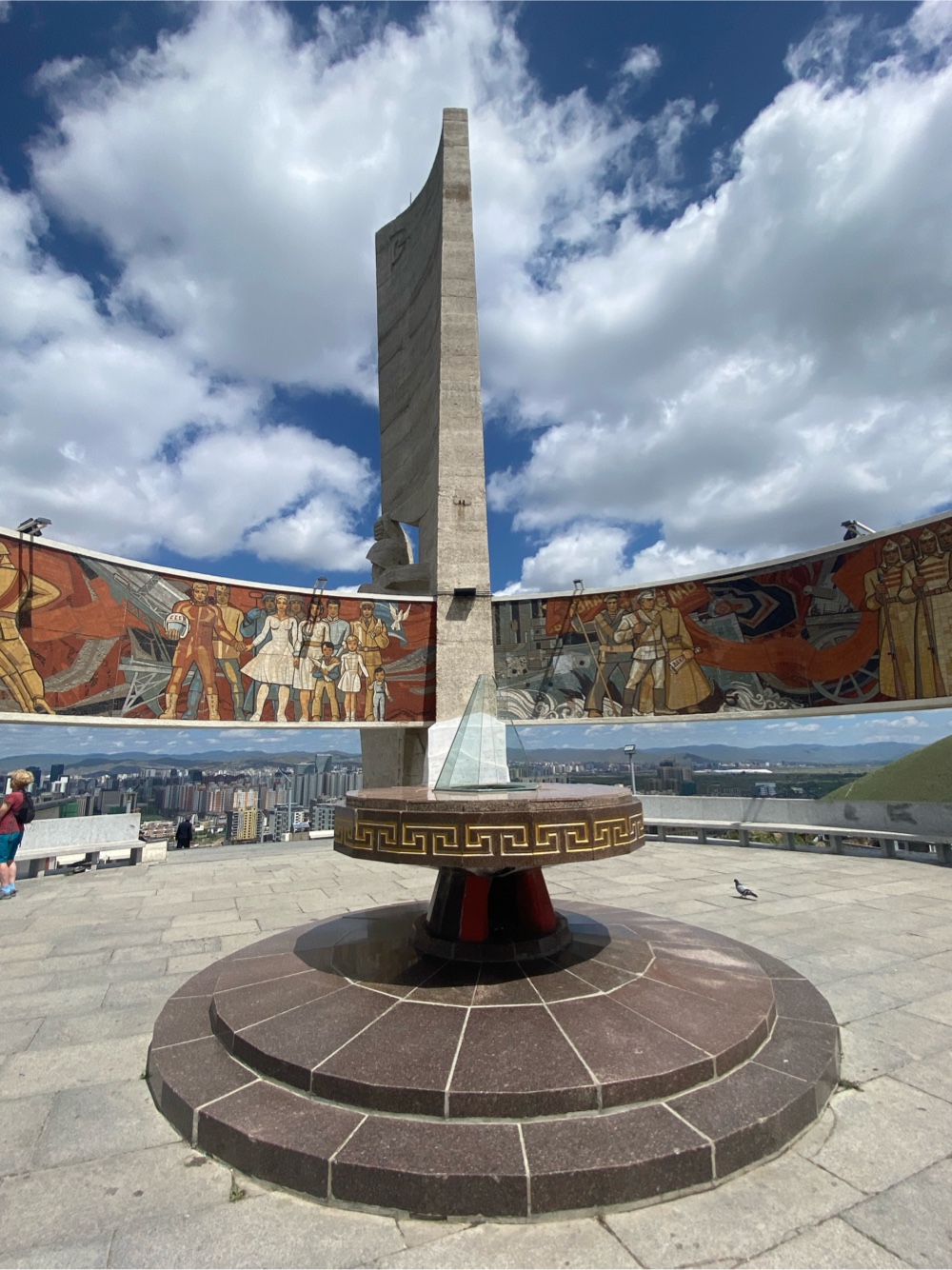
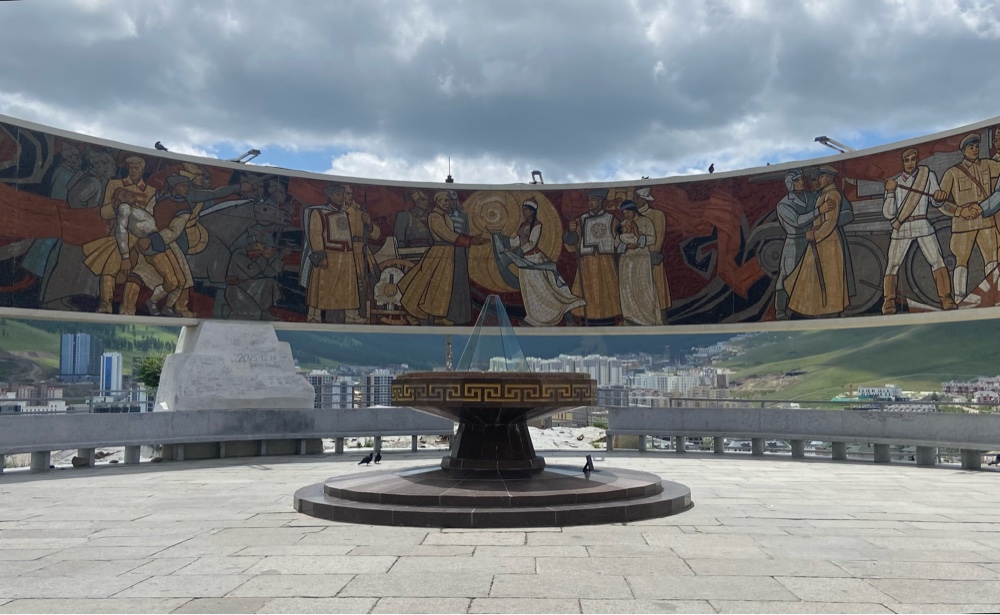
This is a memorial to allied Mongolian and Soviet soliders who were killed during WW2, located on the top of a hill in southern Ulaanbaatar. There are 612 steps up to the monument. It features a circular painting depicting the scenes of friendship between the people of the USSR and Mongolia. The overall design represents a traditional Mongolian fireplace
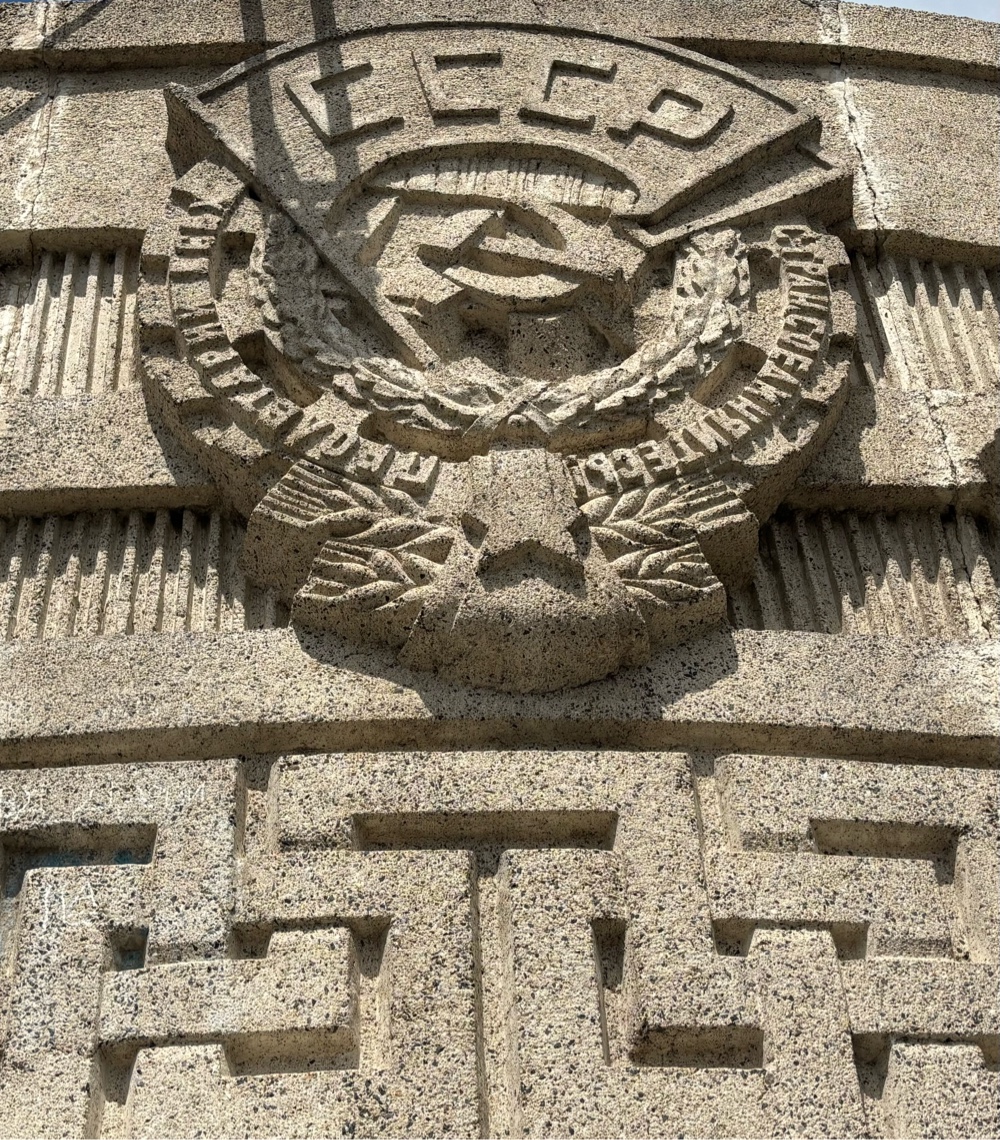 |
| Soviet references, such as “CCCP”, are easy to spot in the memorial. |
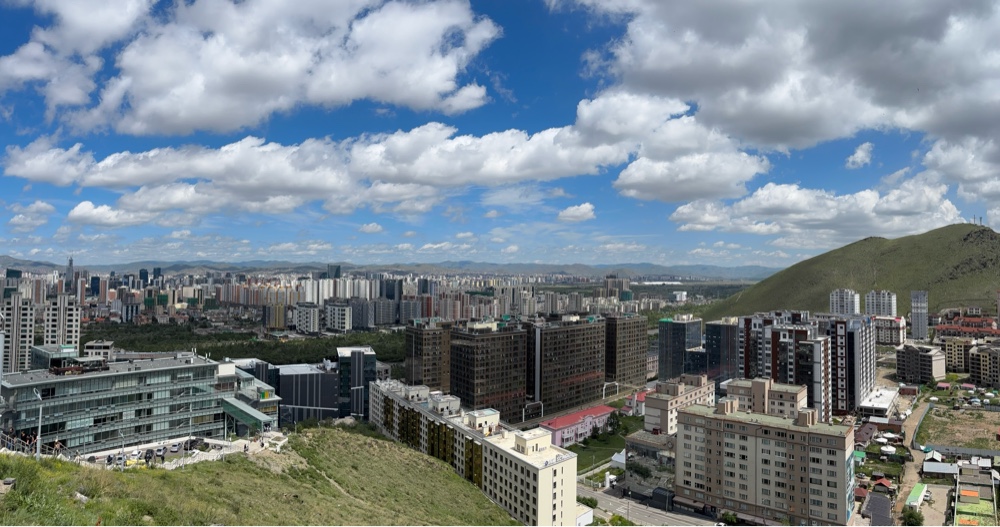
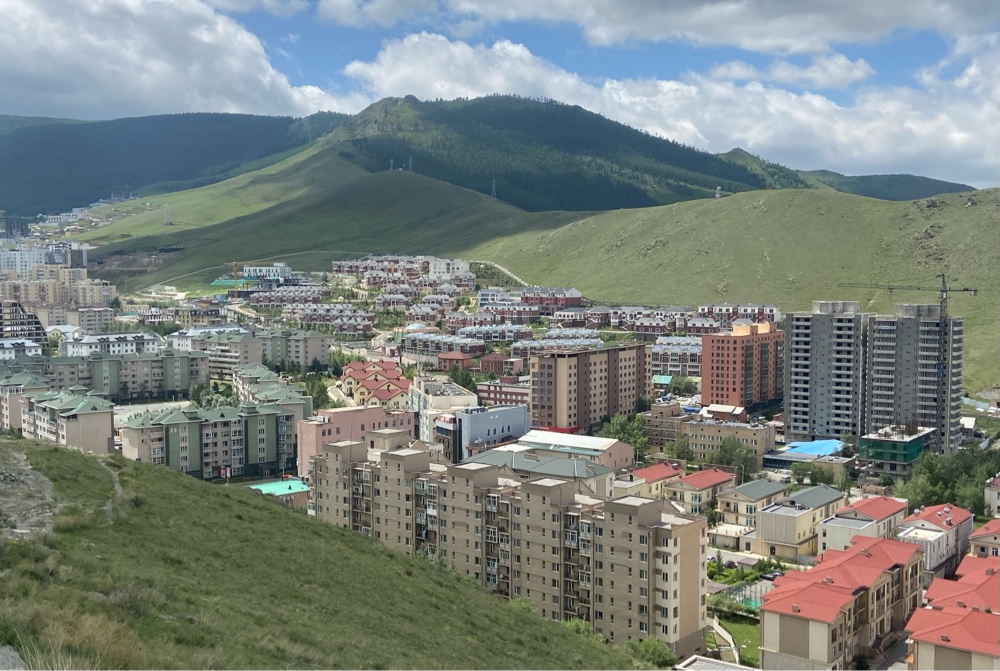
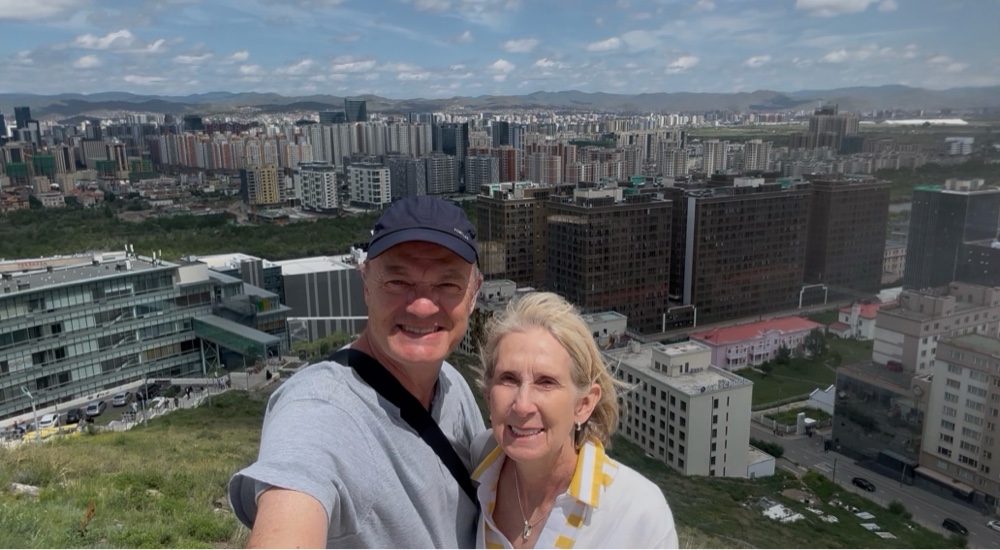
The Views of UB’s campus incredibly dense apartment developments from Zaison Monument 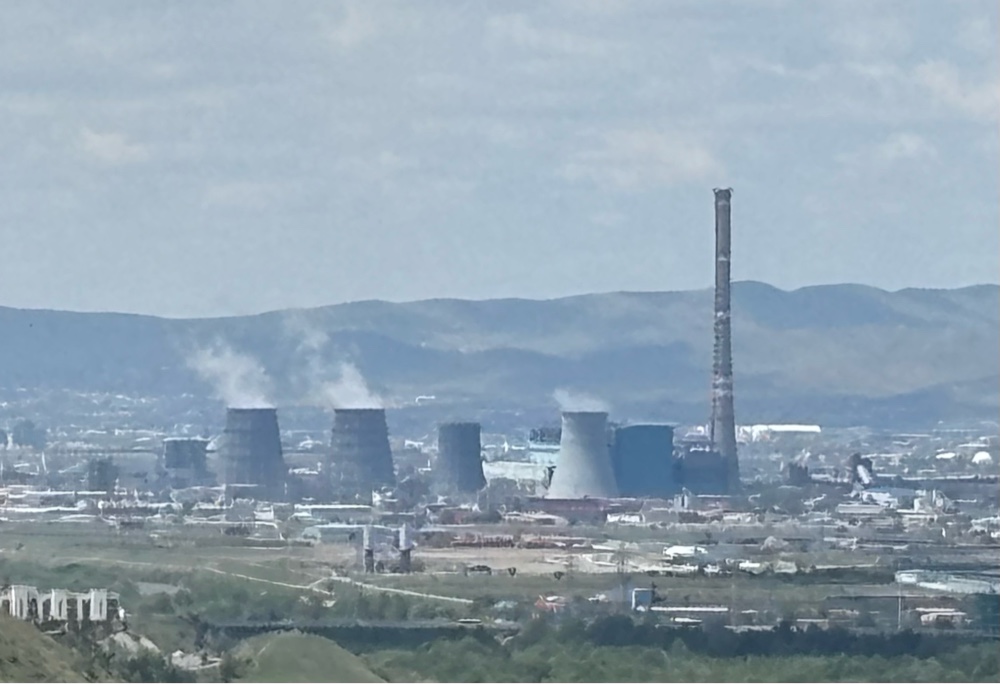 |
| With limited rivers to generate electricity, the city relies on nuclear power. |
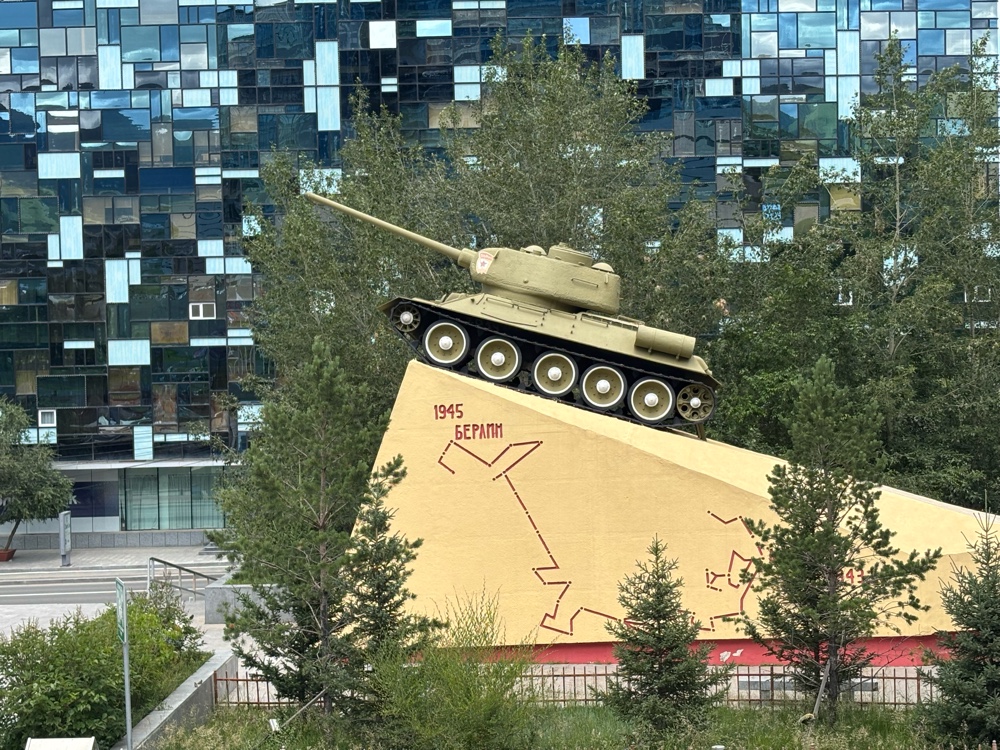 |
| At the foot of Zaisan Monument is a T-34 Russian tank. The base that the tank sits on details the route that the 112th Revolutionary Mongolian Tank Brigade took from Moscow in 1943 to Berlin, where it helped in the operation to overthrow the Nazi regime. |
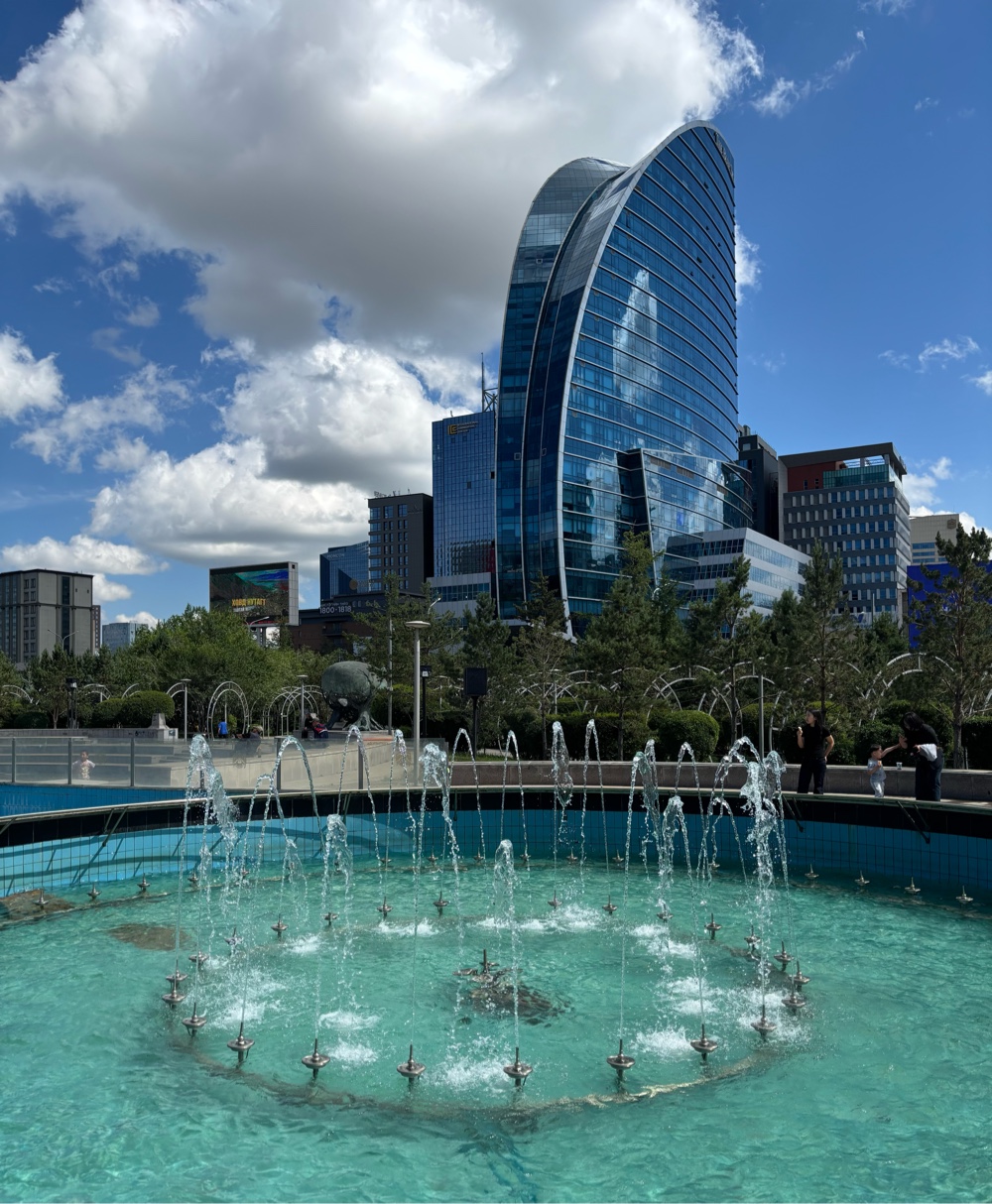 |
| Back in Sukhbaatar Square, where we started our UB explorations two days ago, we enjoyed the fountain display. The Blue Tower, a symbol of Mongolia’s recent modern development, is in the background. |
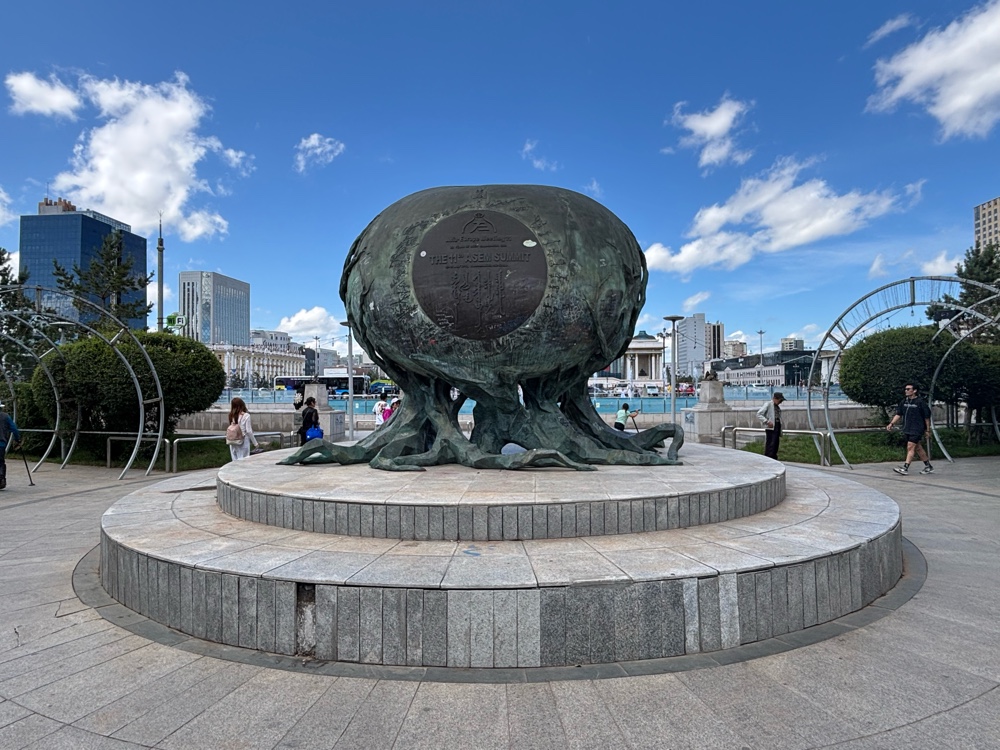 |
We were drawn to this monument, just south of Sukhbaatar Square, because it looked like a giant brain! It is actually called “Apex of the Sky” and was made to commemorate the 11th ASEM Asia-Europe Summit, which took place in UB in 2016.
|
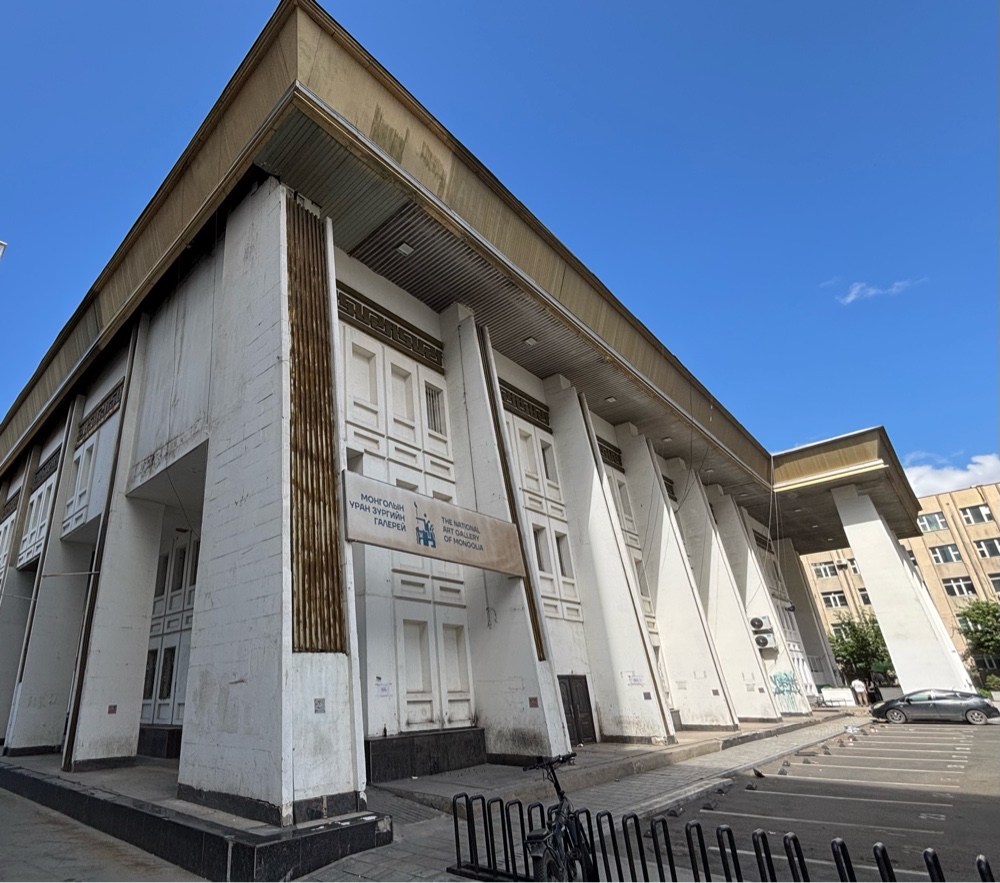
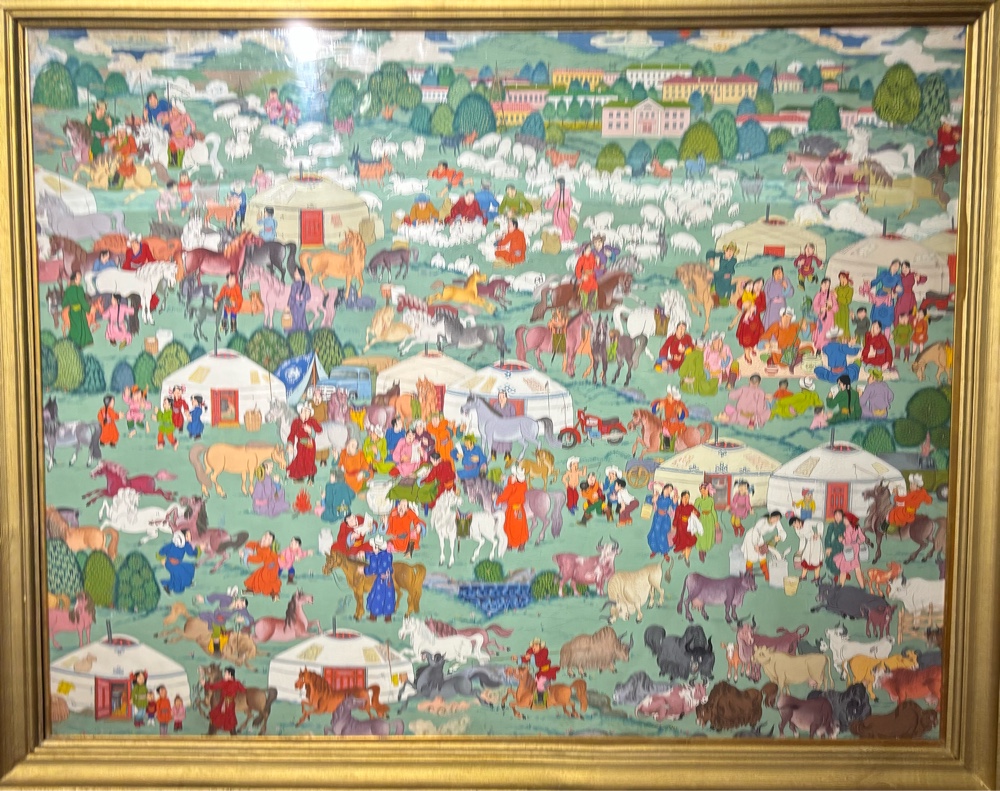
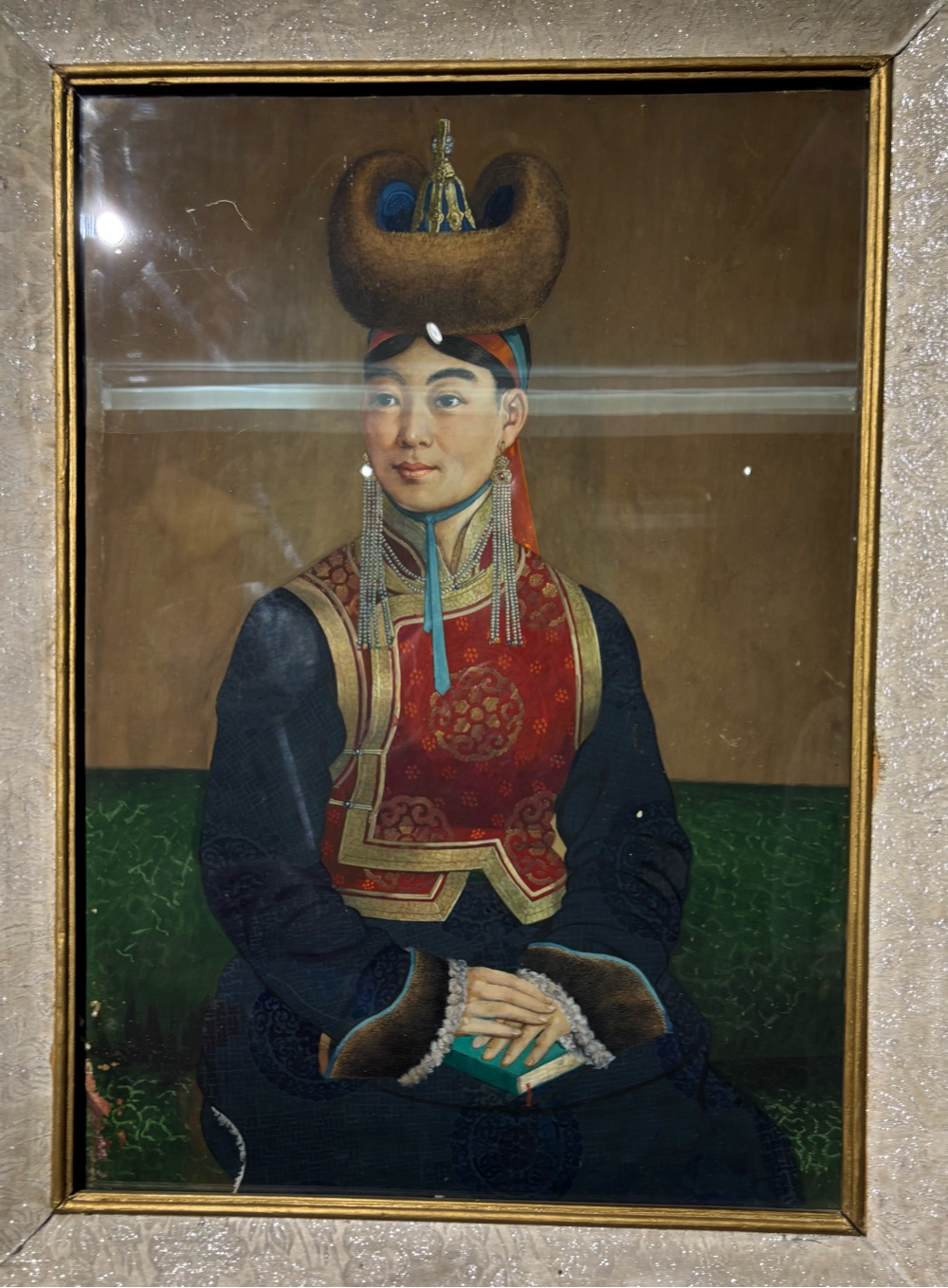
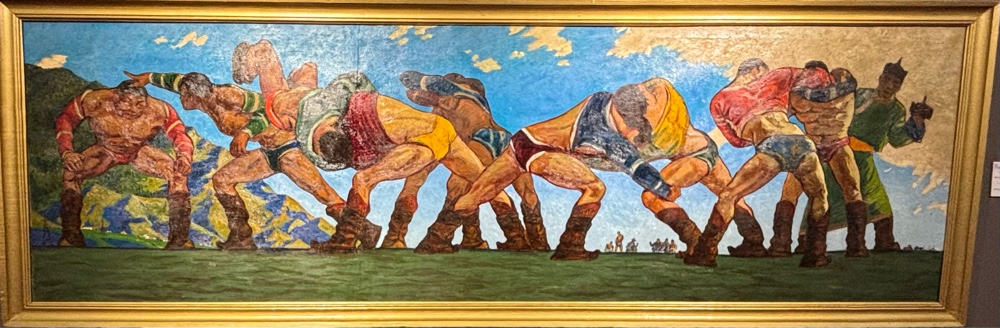
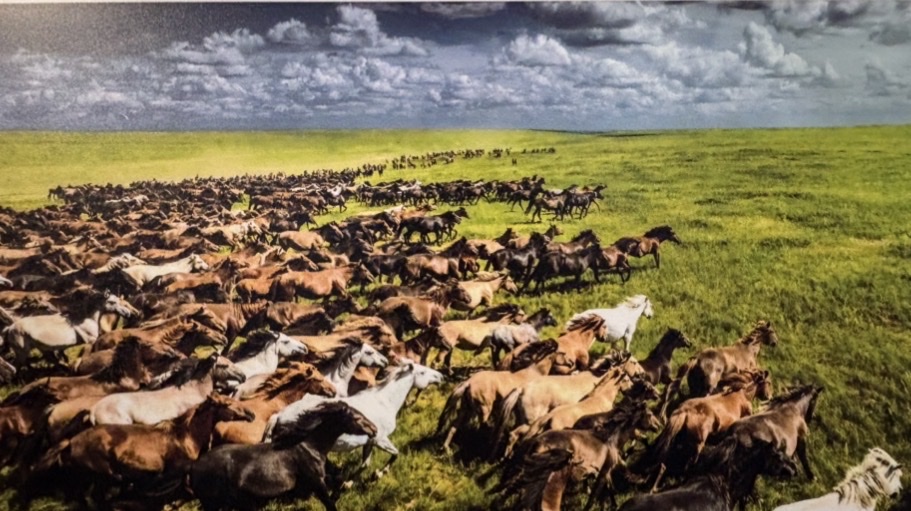
National Art Gallery of Mongolia
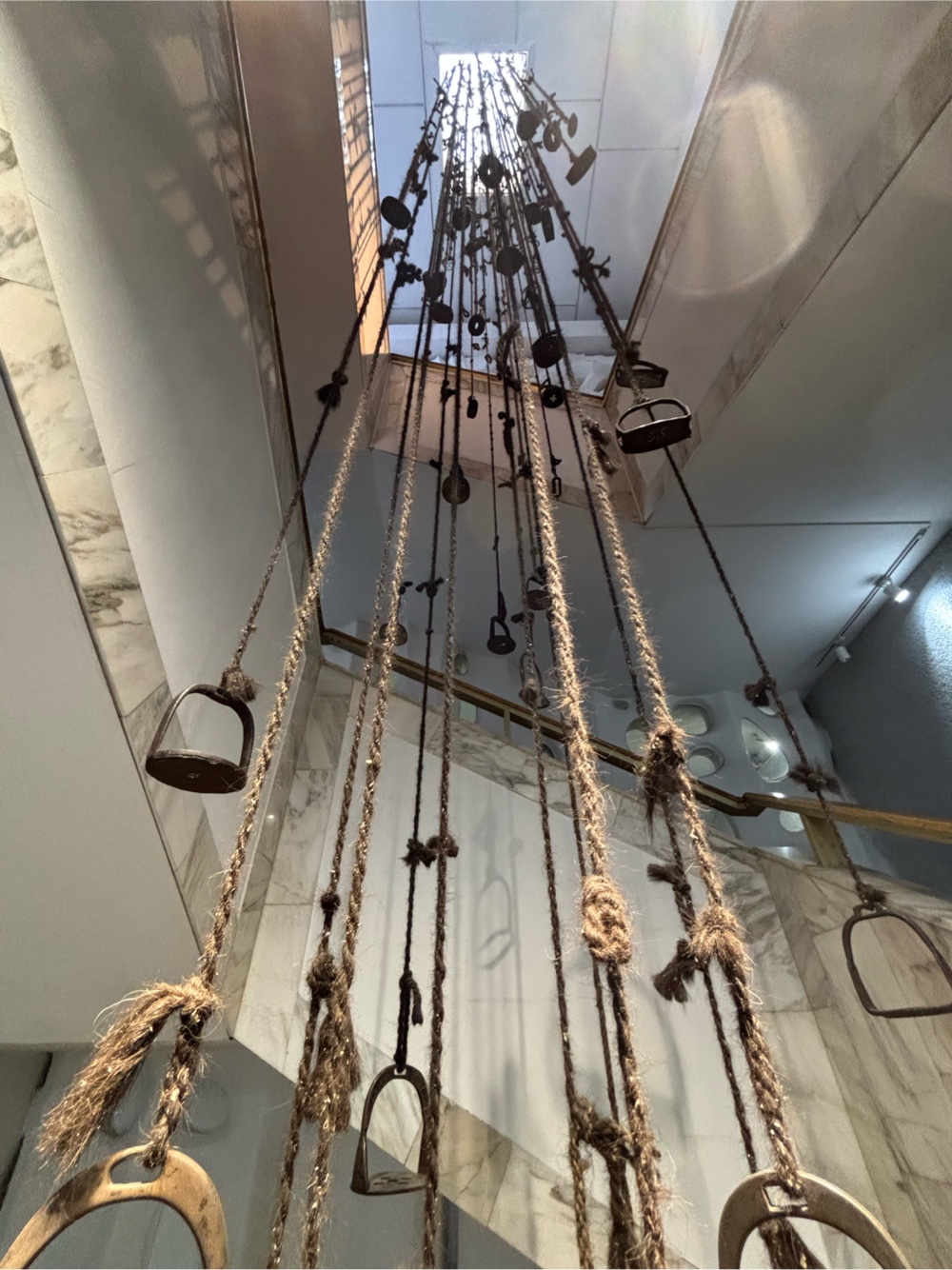
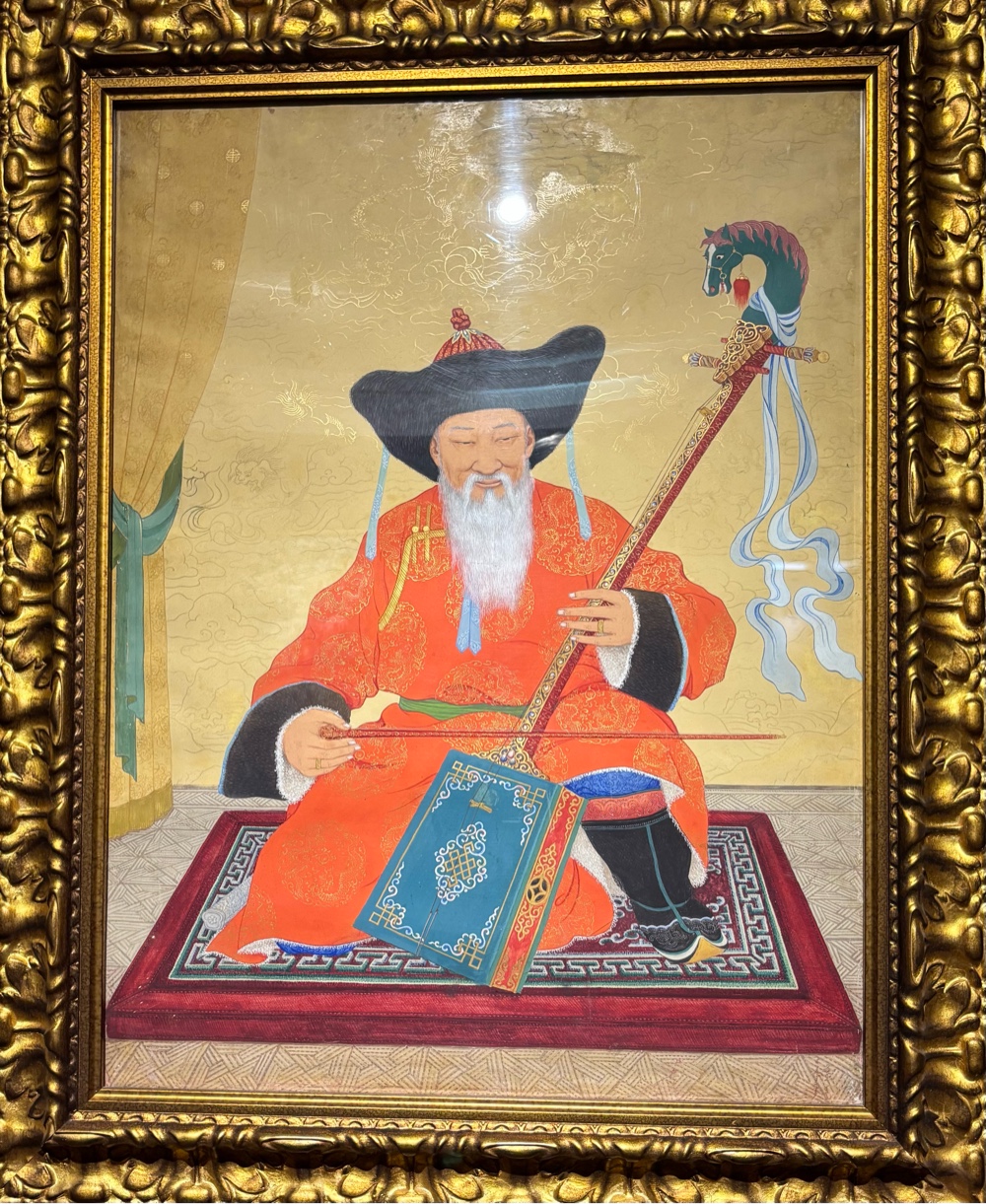
The National Art Gallery of Mongolia was established in 1991 and provides an overview of Mongolian nature, from the Gobi dessert to the western mountains, and the desert steppe (prairie). It has over 4000 art works, produced since the Mongolian Independence Revolution of 1921.
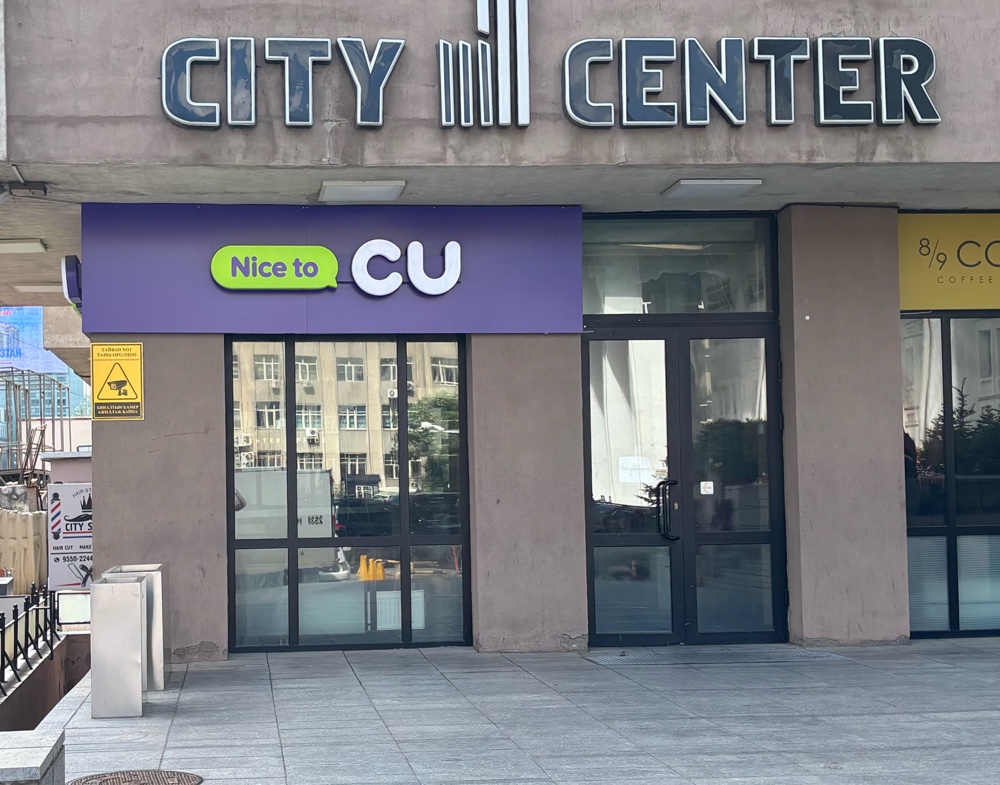 |
| Think Tim Horton’s outlets are commonplace in Canada? Not even Tim’s comes anywhere close to the plethora of ‘Nice to CU’ stores, everywhere in Mongolia. There is always a CU in view. |
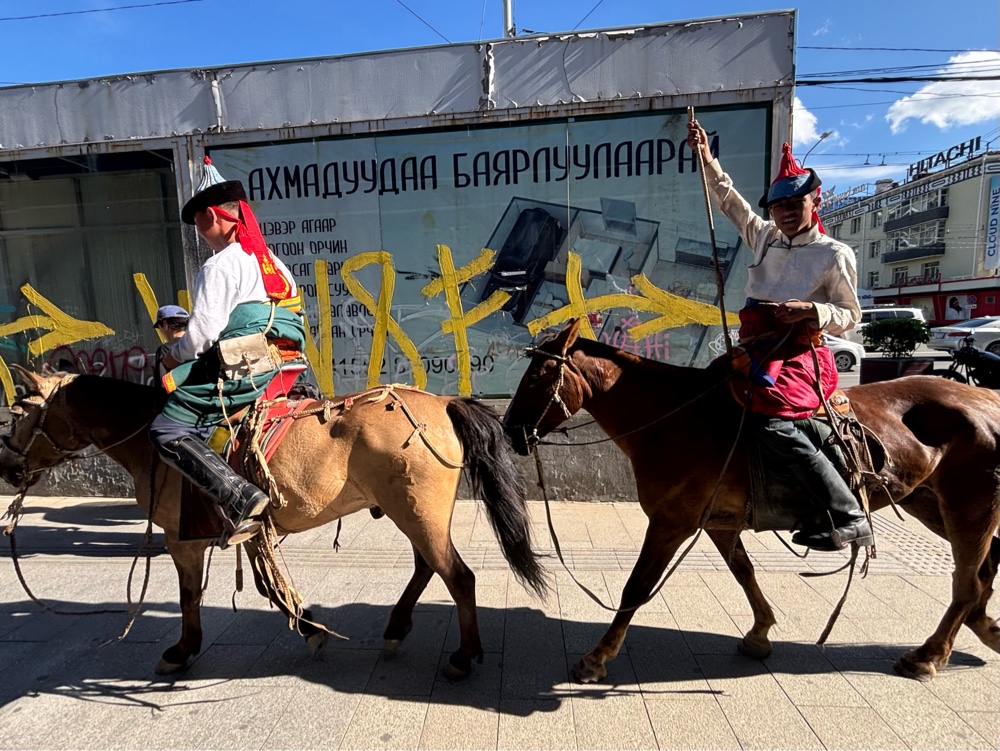 | | On our way back to the hotel on Sunday, a traditionally clad rider galloped past us at a high speed on the city’s main avenue. Today, another two traditionally clad riders passed us. Incredible to see such a sight in a modern city like UB. |
|
|
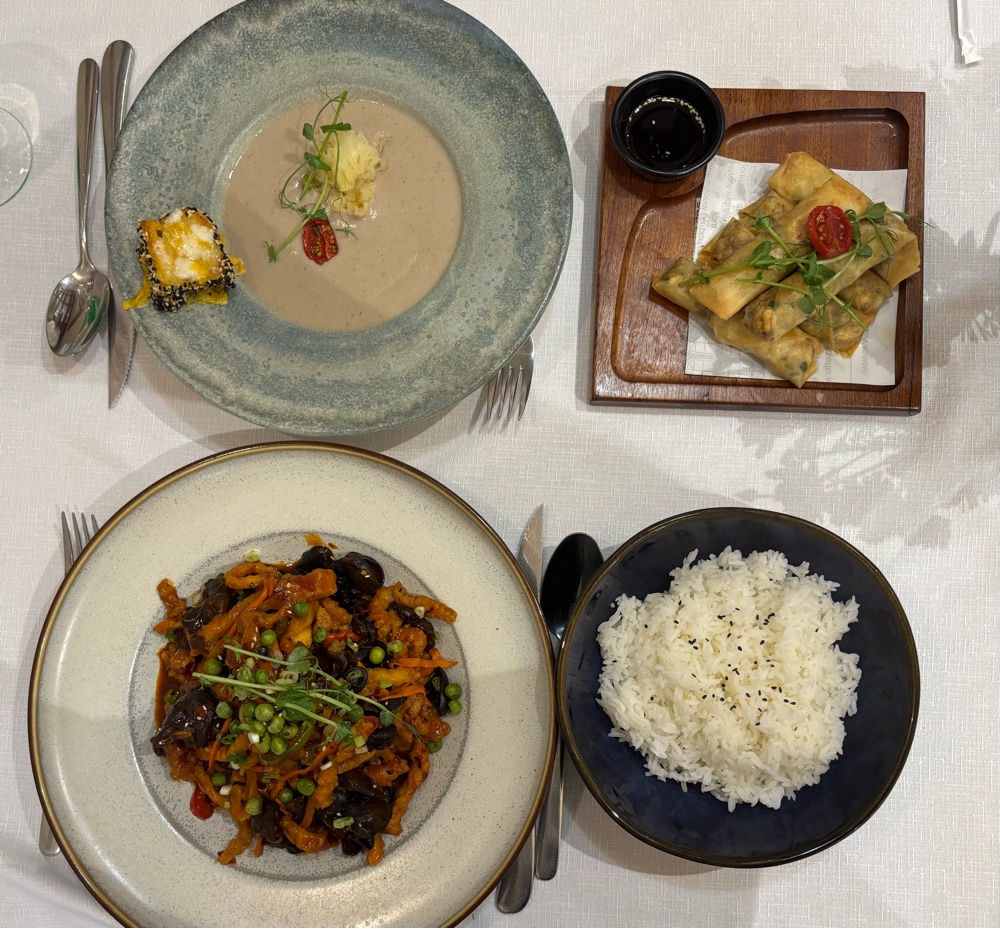 |
| We weren’t sure what the food would be like in Mongolia. To our great surprise, it has been amazing! This was dinner at the hotel: Pam choose western food this evening, while I had a spicy shredded pork dish. |
Comments
Post a Comment