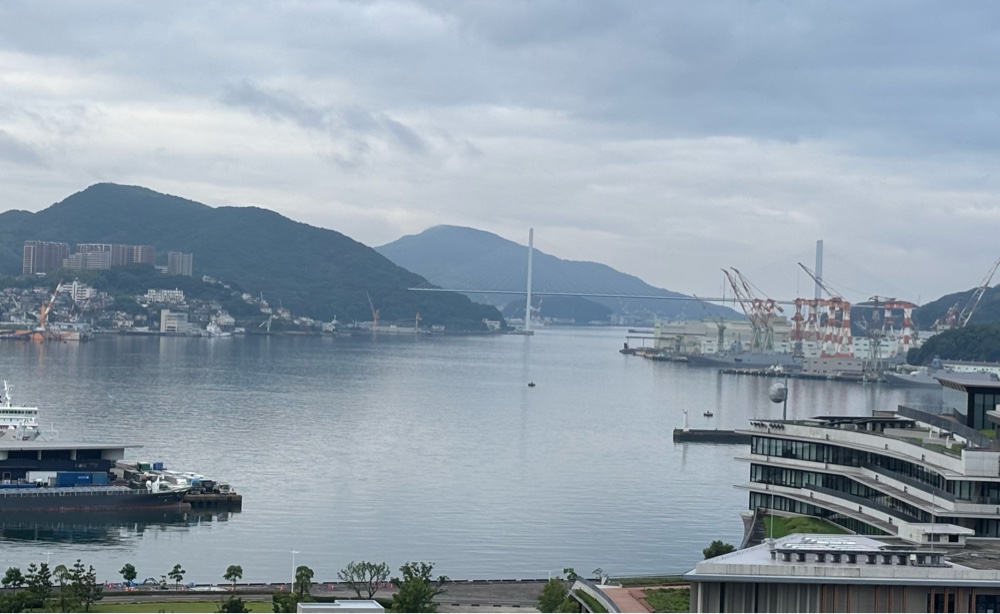
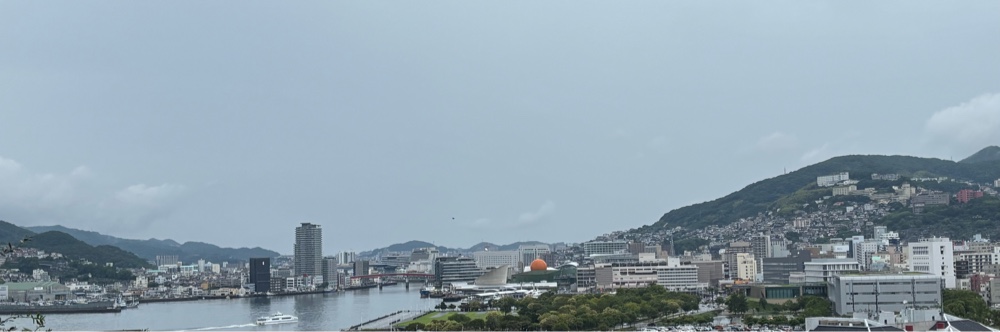
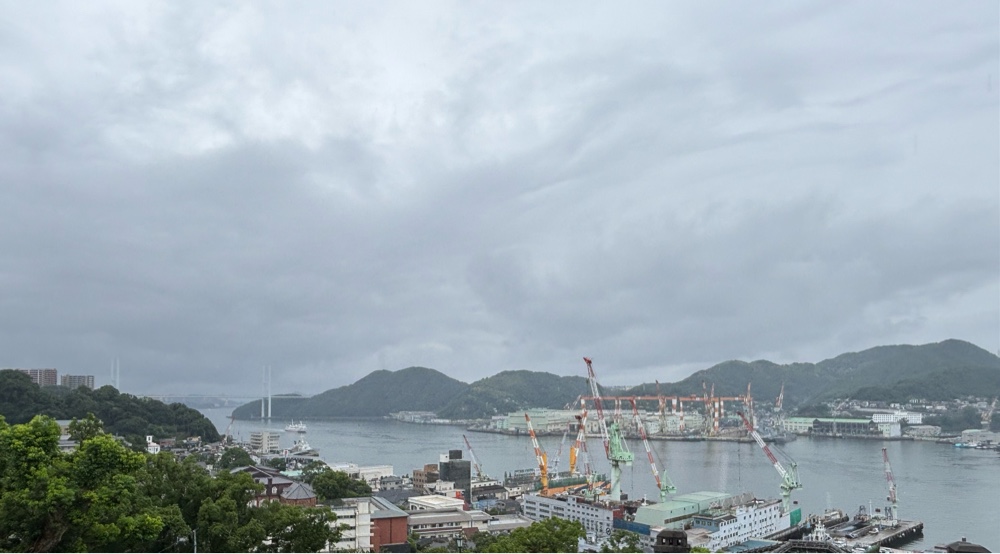
Nagasaki is surprisingly hilly! This geography actually helped the region when the atomic blast happened.
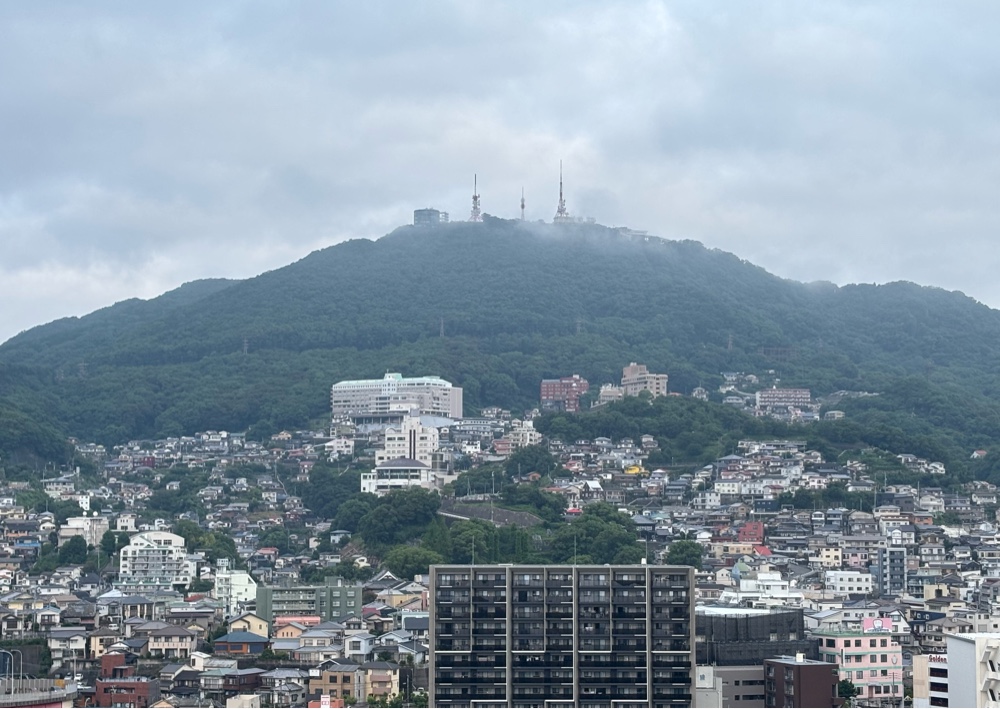 |
| View of Mount Inasa from our hotel room. |
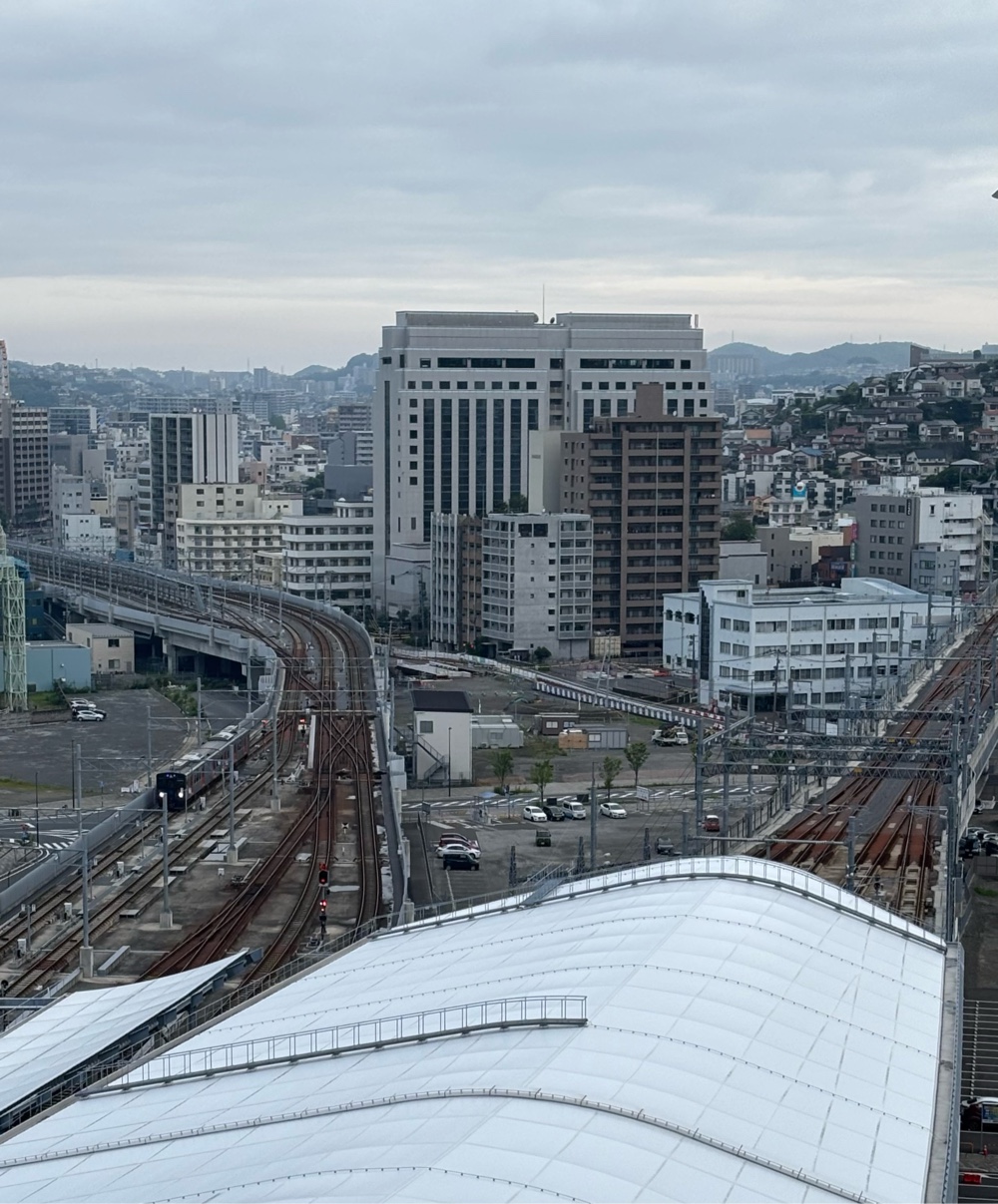 |
| The two main rail lines into Nagasaki. |
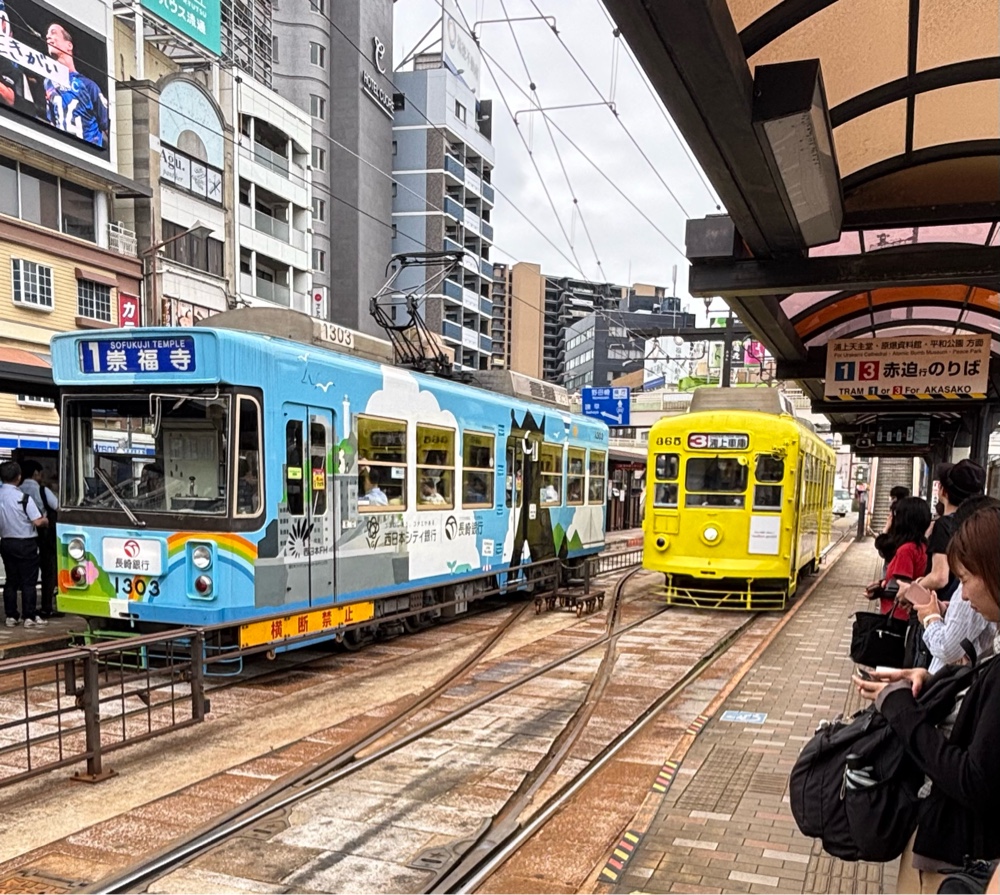 |
| Th Nagasaki trams are an icon of the city. And they are an incredibly efficient way of navigating Nagasaki. We used them all day long. A pass is only 600 yen ($5 CAD). |
Exploring the atomic bomb memorial aspect of Nagasaki 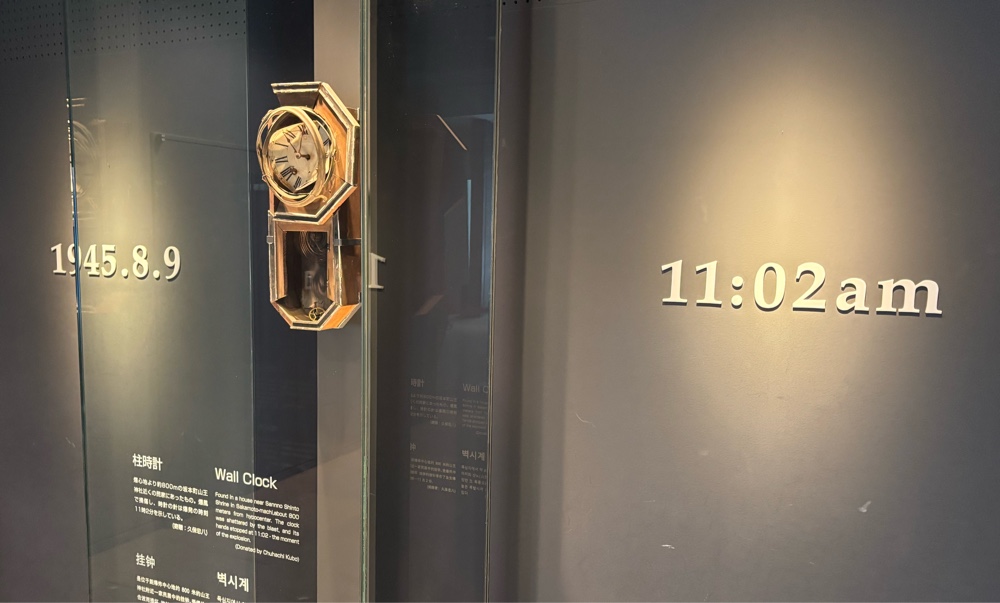 |
| The bomb exploded 11:02 AM on August 9, 1945, three days after the bombing of Hiroshima. |
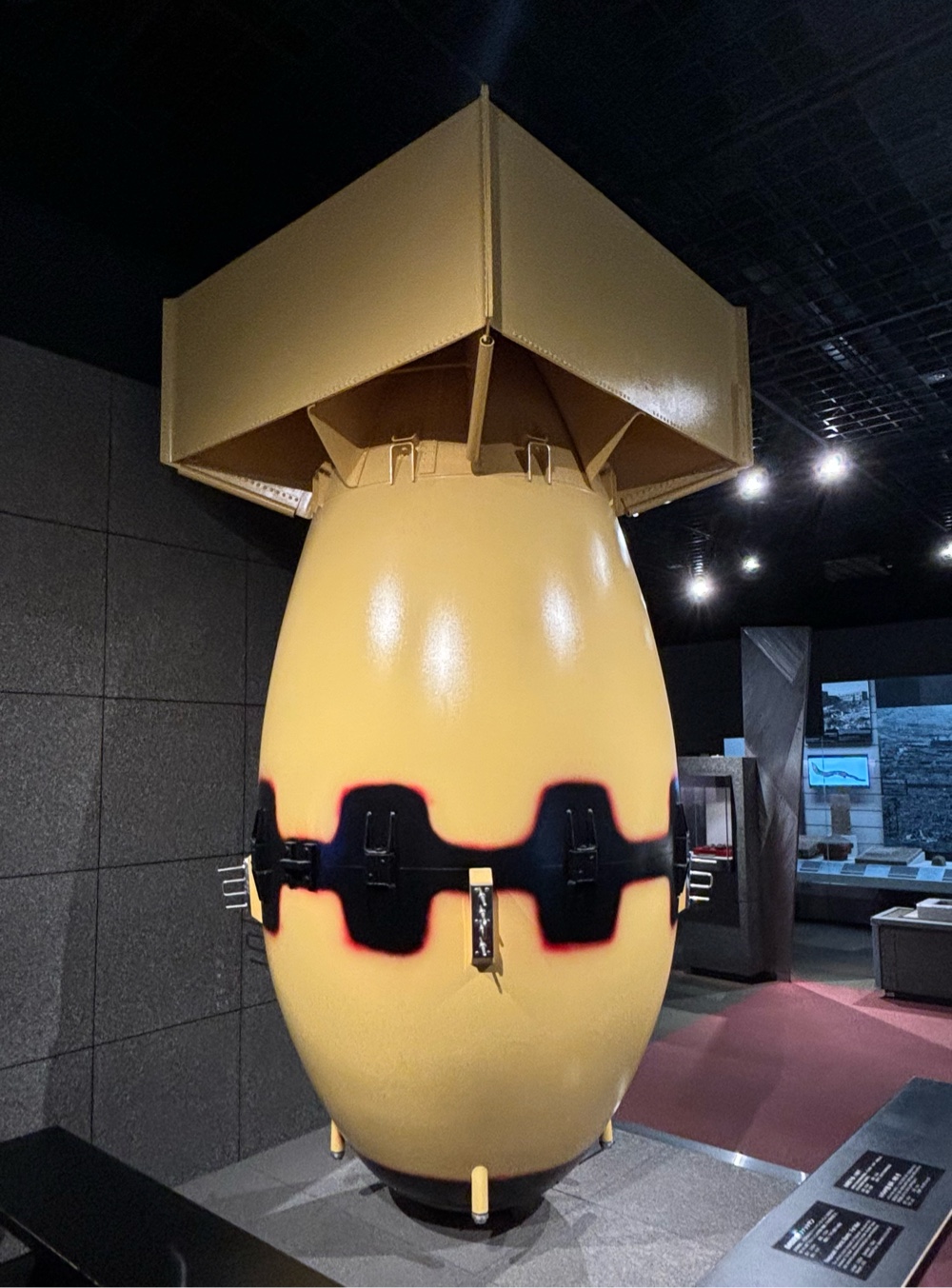 |
| This is a reproduction shell of the bomb. The US military painted the bomb yellow and coated the seams in black sealant. |
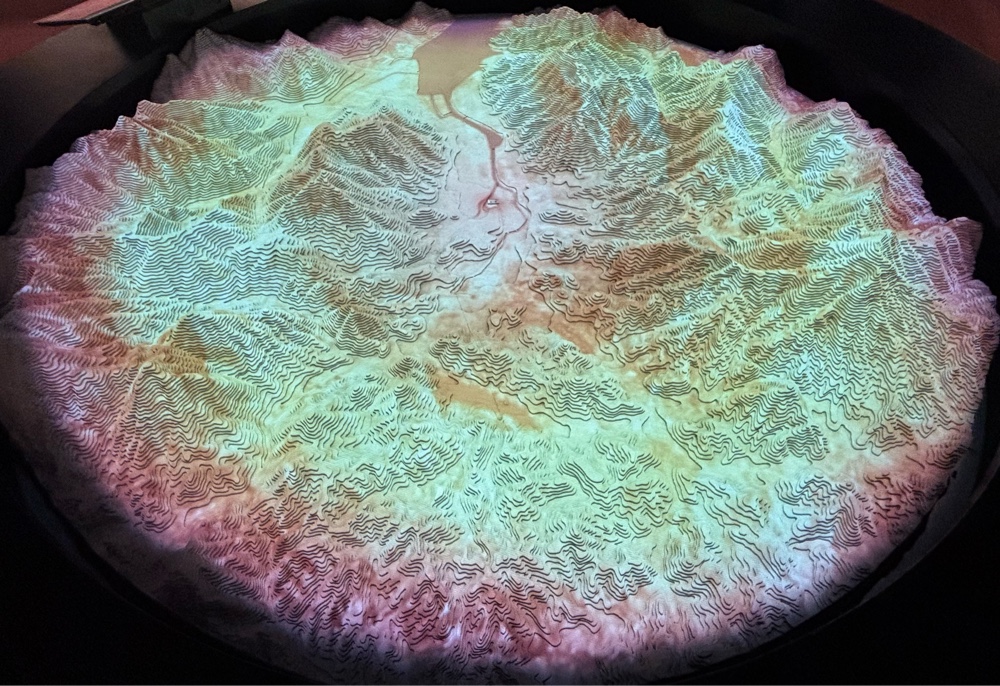 |
| This model shows the geography of the Nagasaki region. The port’s opening (to the south) is shown at the top of the photo. The bomb exploded over the pinkish flat area in the top center of the photo. The mountains limited the shockwaves from reaching out, as was the case in Hiroshima. |
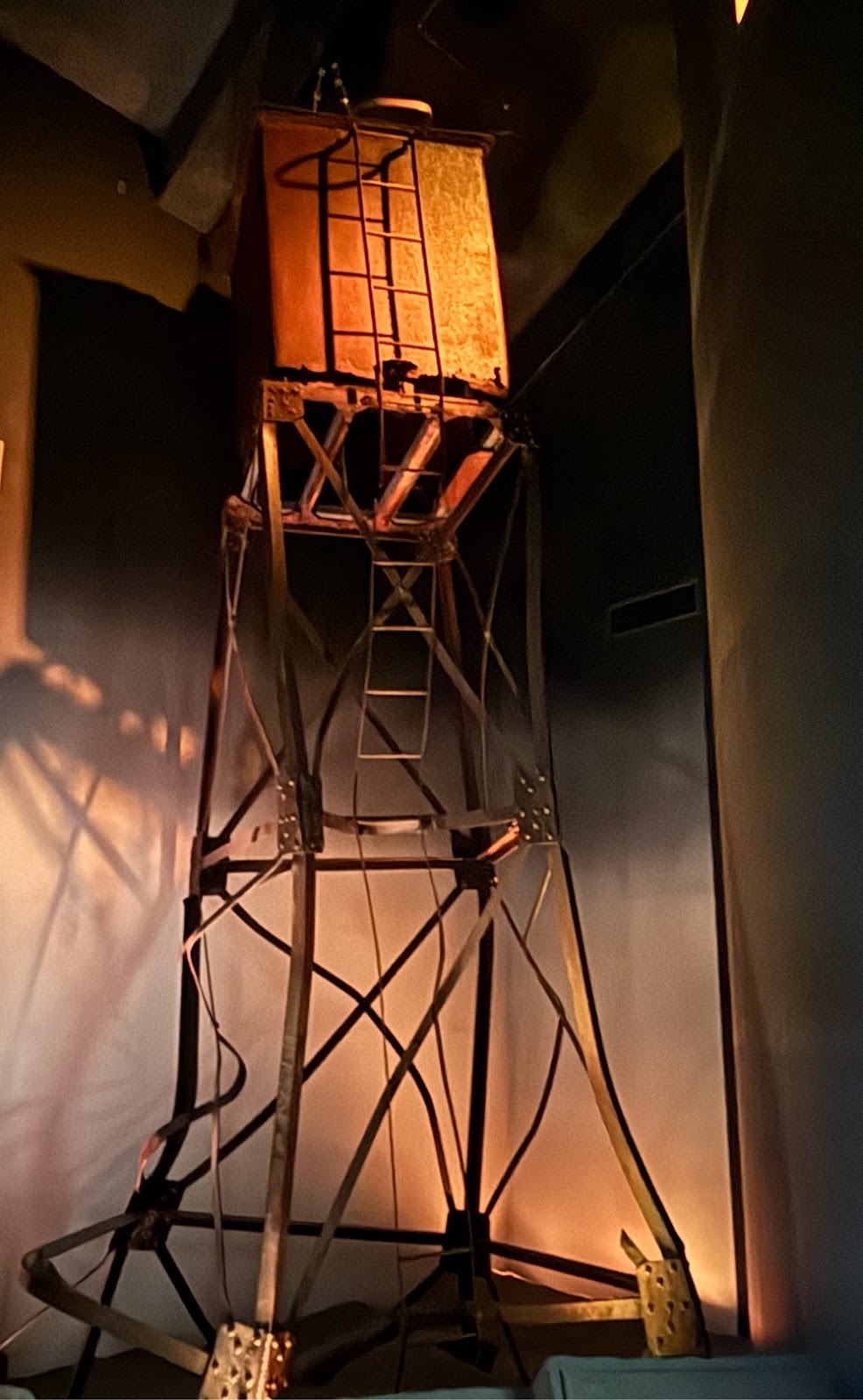 |
| Near the epicentre of the explosion was a large primary school, with a few hundred children. This is the twisted steel frame of the school’s water tower. |
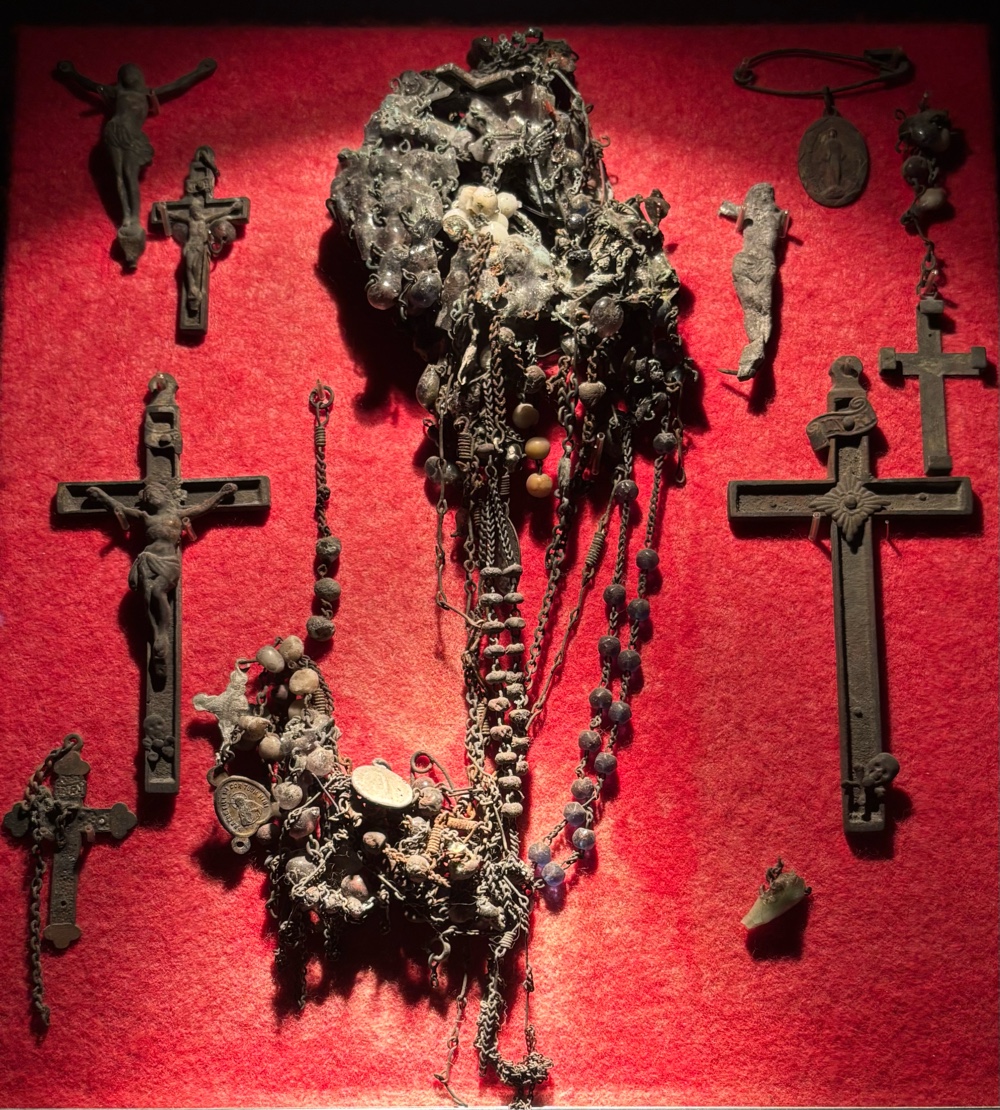 |
| This picture features the fused glass rosary beads of a devout Catholic woman, who was killed at the Uramaki Cathedral. Her daughter found the beads in the ashes of her home. |
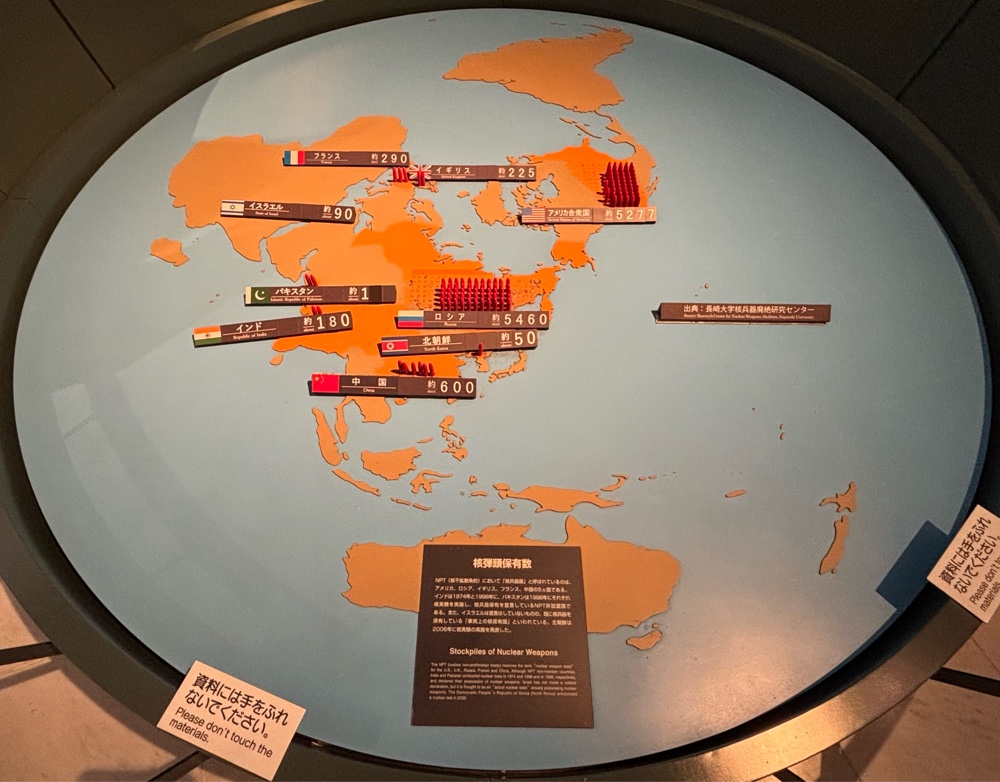 |
| This map shows the nuclear bomb stockpiles of the nine nations that possess nuclear weapons. |
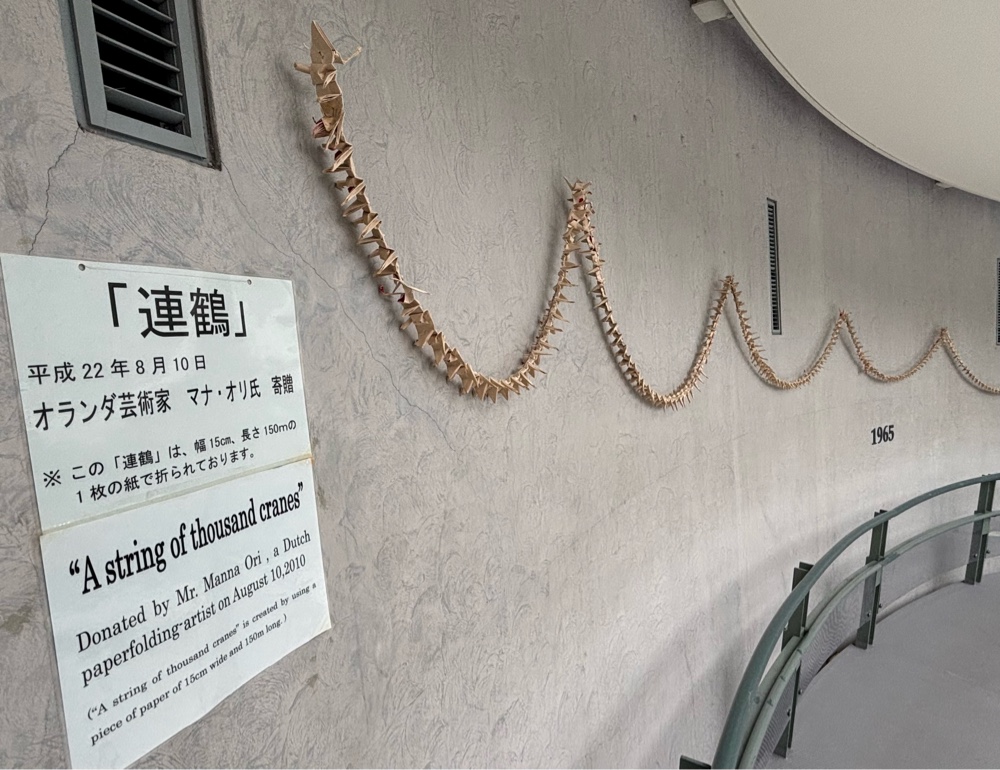 |
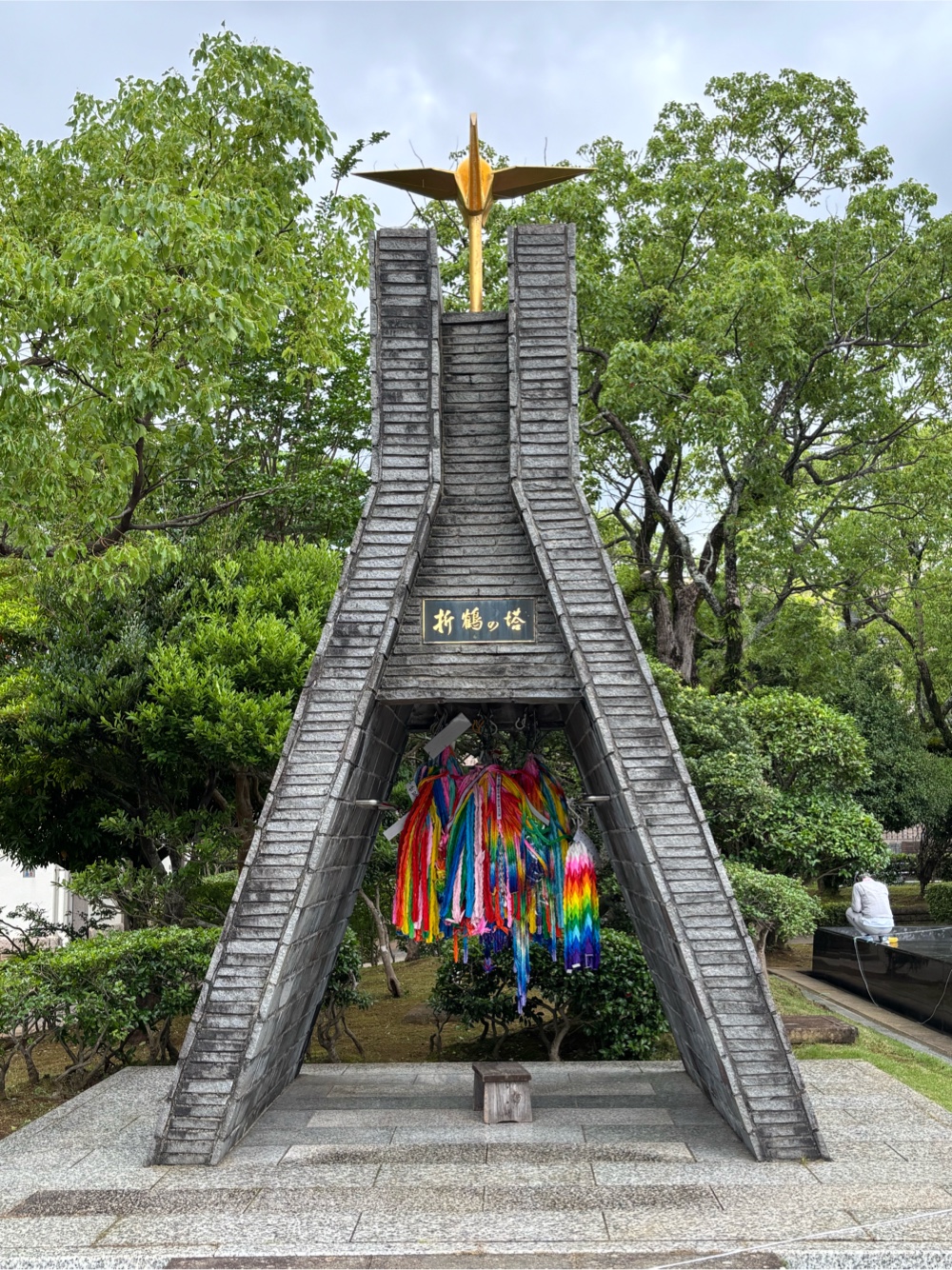
| At the Atomic Bomb Museum, this string of 1000 paper cranes (the cranes have become a symbol of memory of the victims) greets visitors as they prepare to enter the exhibits. |
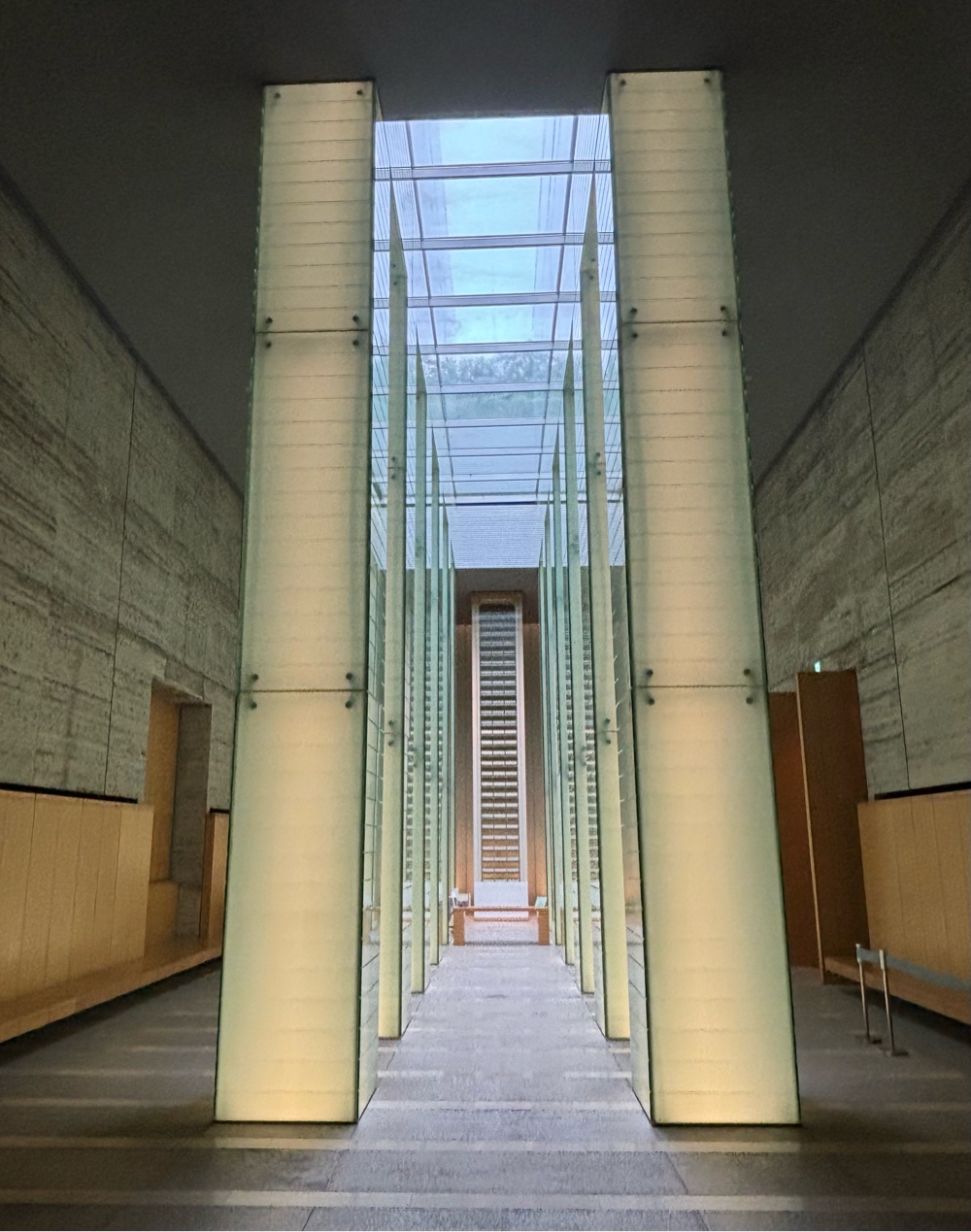 |
| In the Peace Hall, these glass pillars reach skyward. In the center rear, the pillar of 26 shelves contains the names of the more than 200,000 victims of the bombing. |
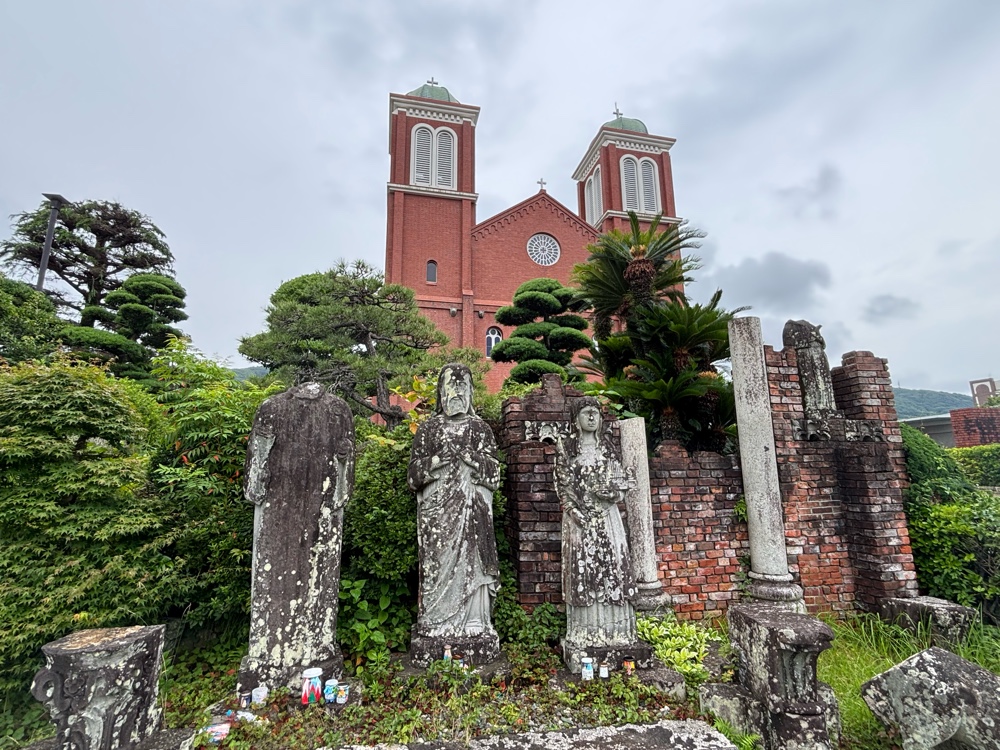 |
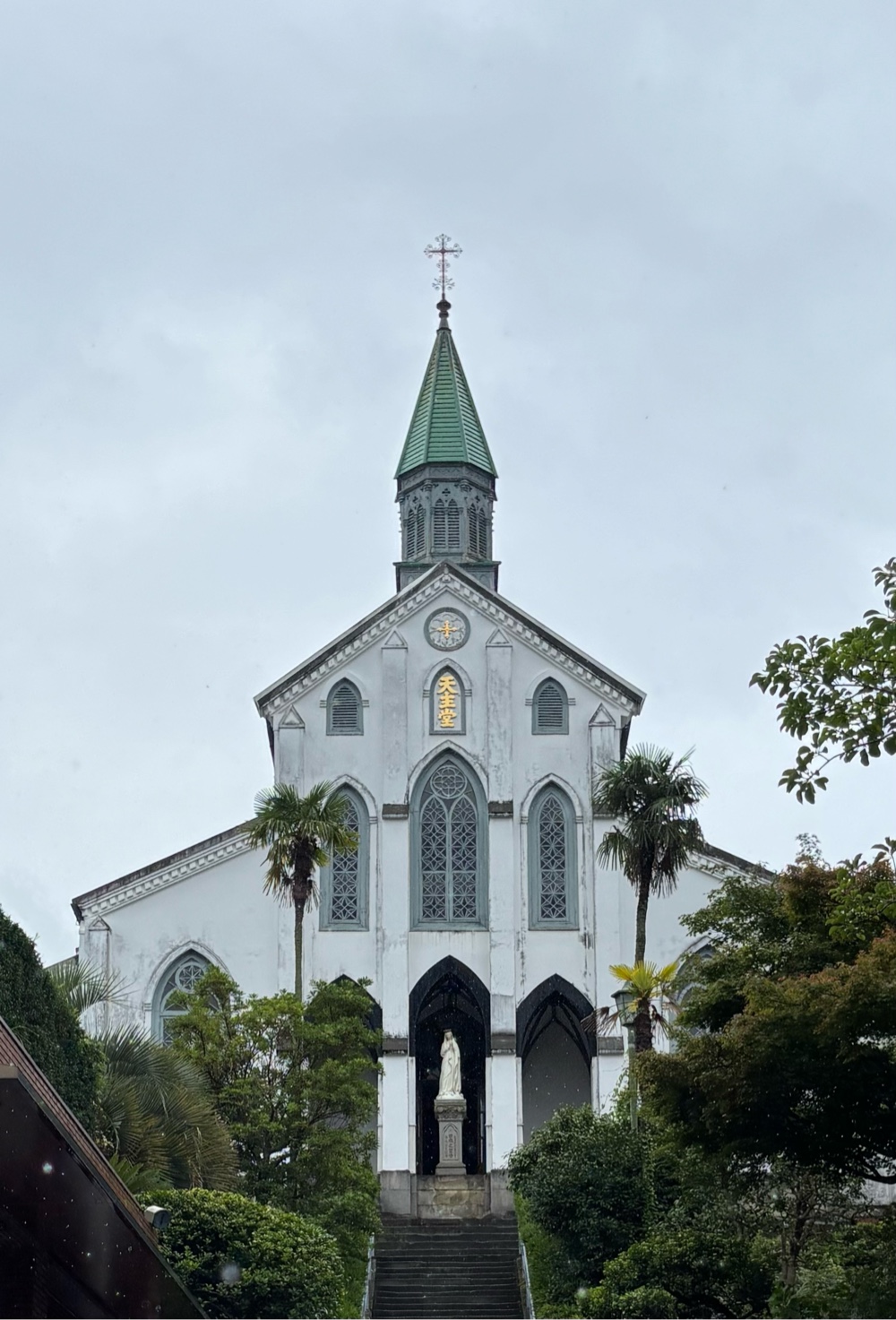
| Uramaki Cathedral originally opened in 1914 after 30 years of construction. On August 9, 1945, it was demolished in three seconds. The original was the largest cathedral in Asia. The church was rebuilt after the war, although in a smaller version. |
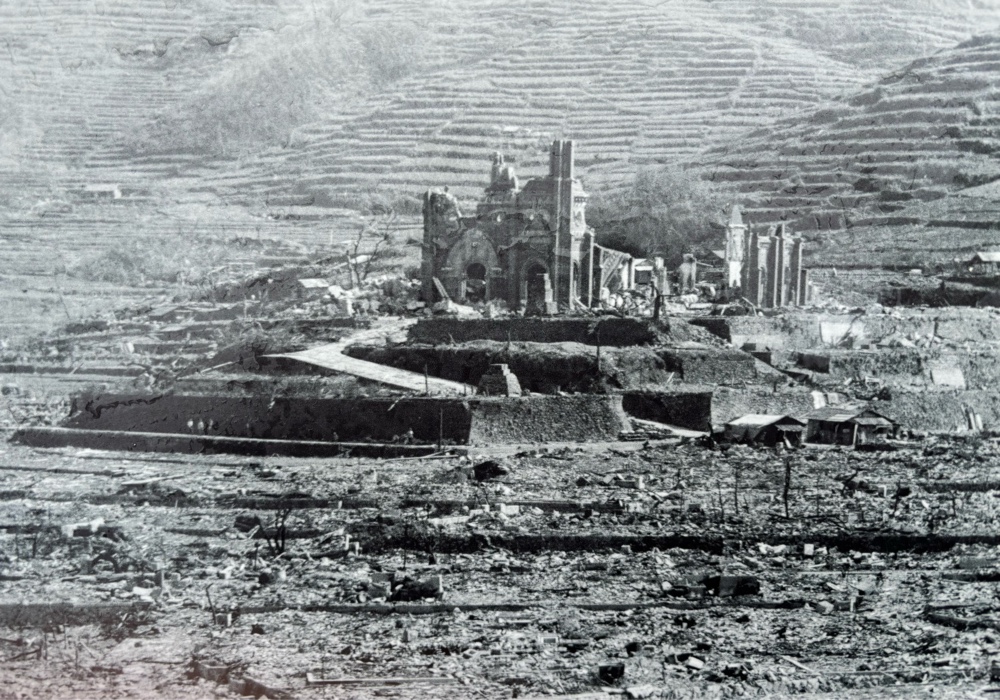 |
| The ruins of the Uramaki Cathedral following the blast. |
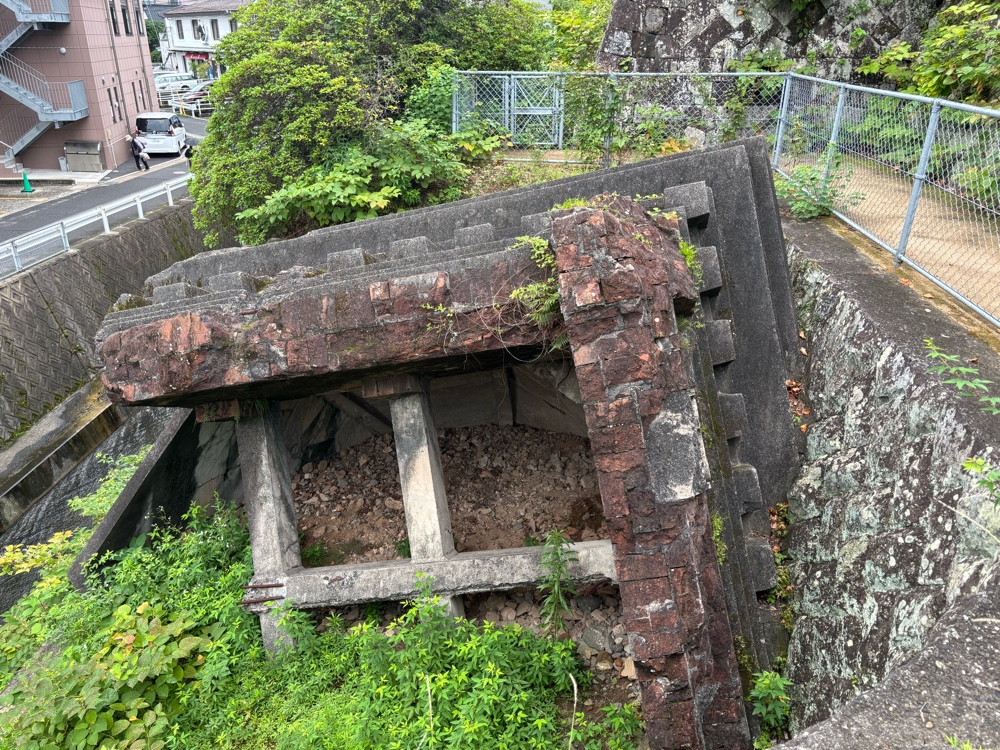 |
| This is a collapsed belfry of the destroyed cathedral. |
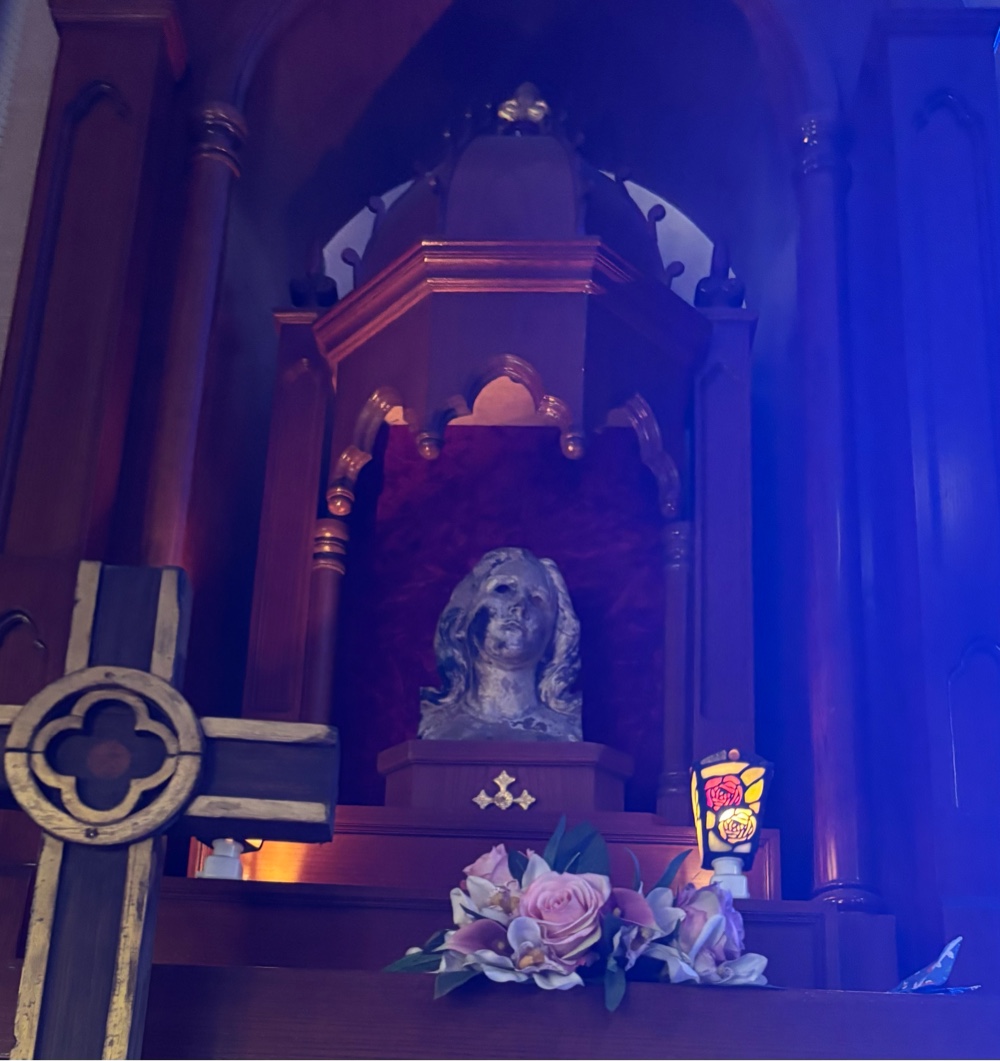 |
| This charred figure of the Virgin Mary was found in the rubble of the cathedral. |
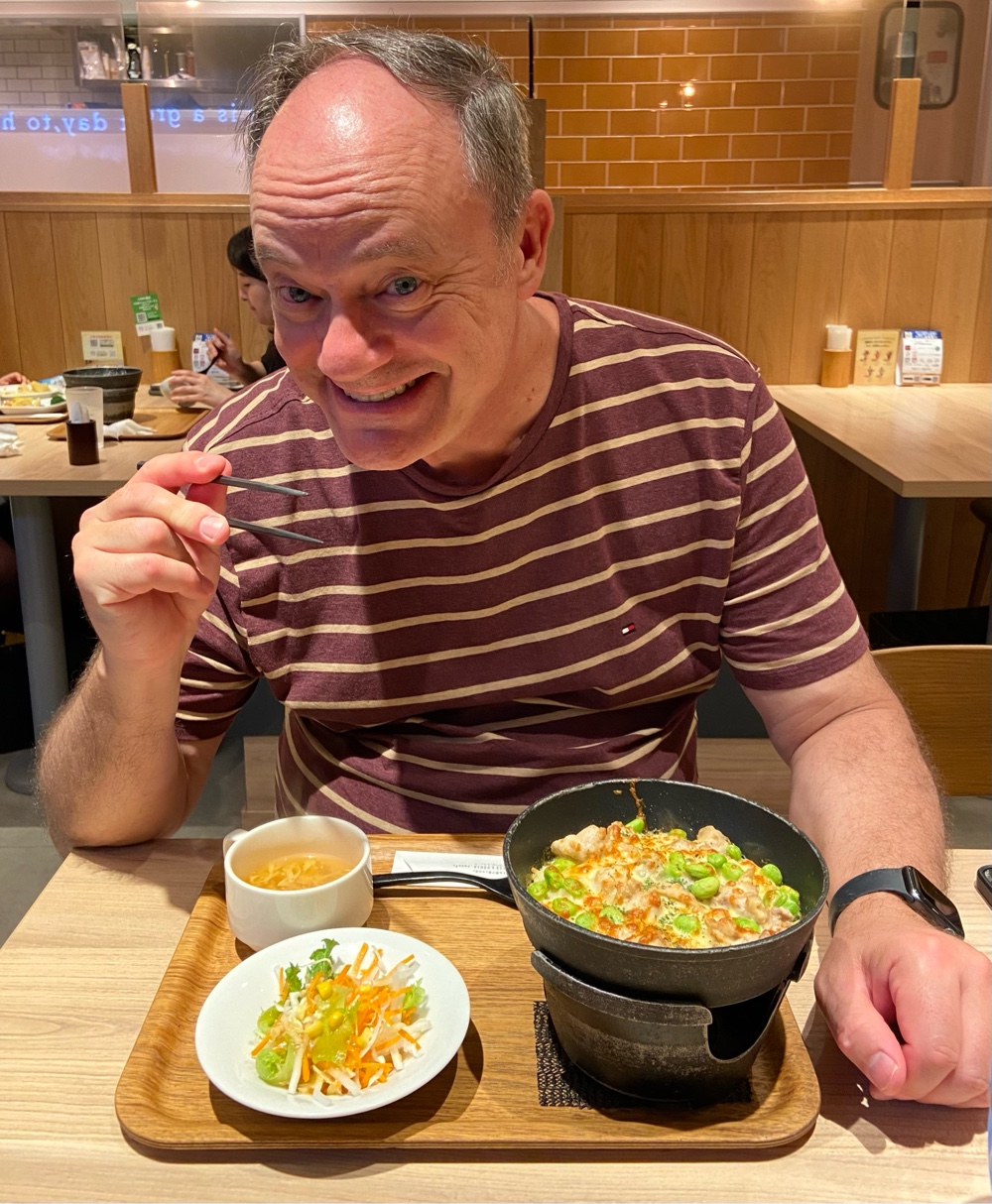 |
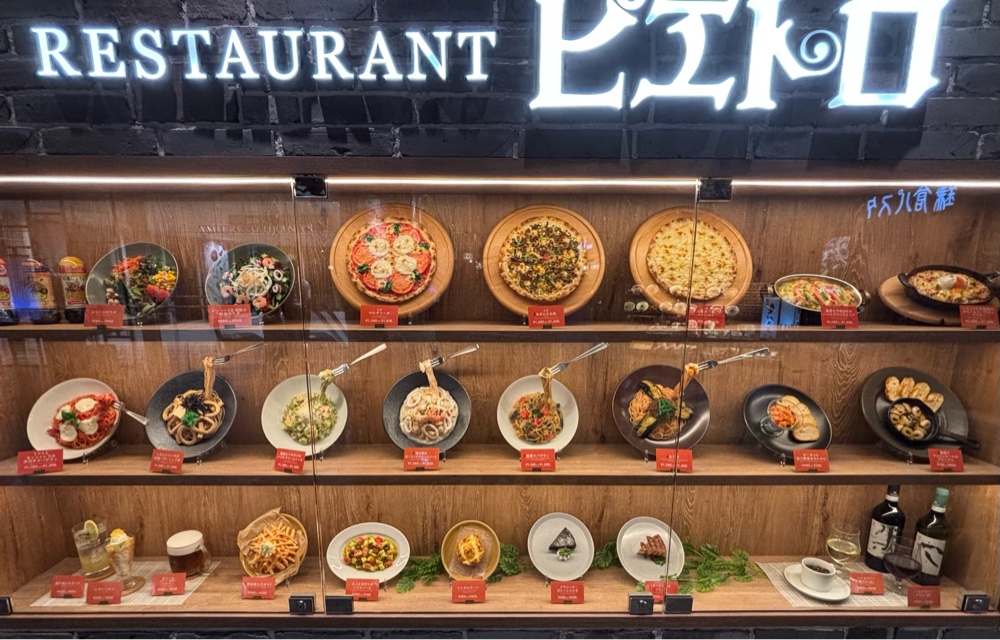
| We had a local dish called “doria” for lunch. It is basically rice and cheese, but our version had chicken and endame beans. |
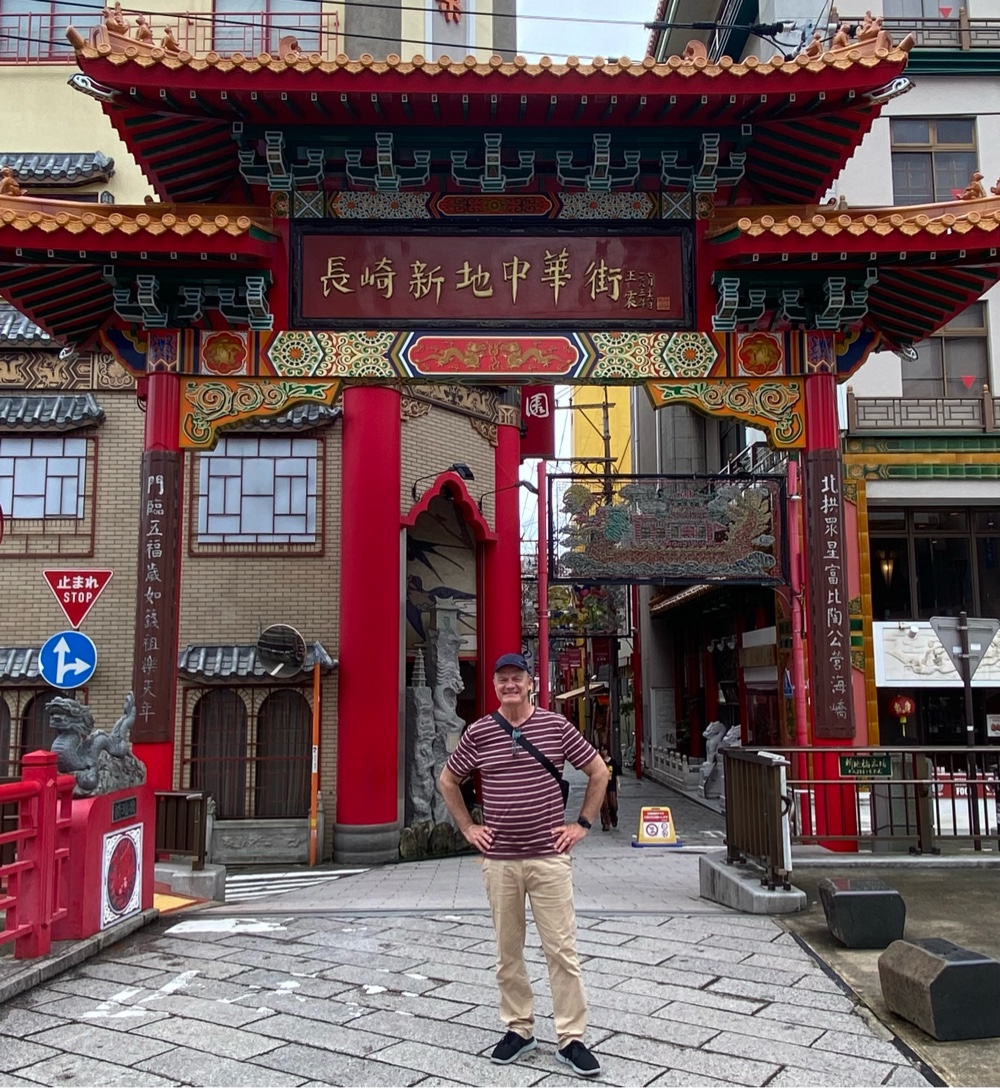 |
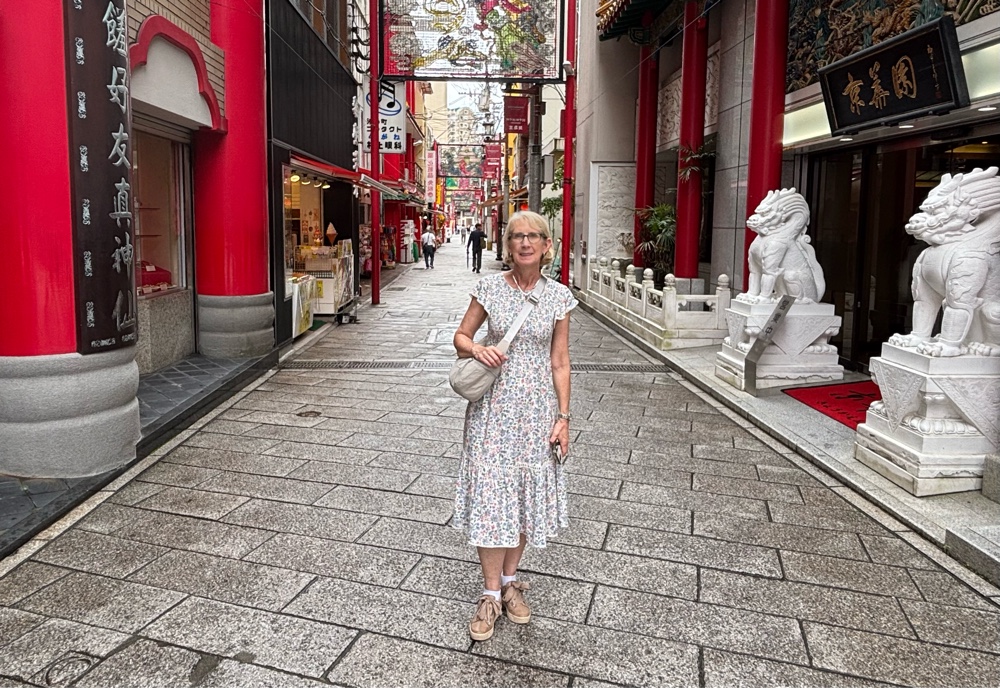
| Nagasaki has long had a Chinatown. While quite small, it continues to flourish. These gates mark its center. |
Dejima
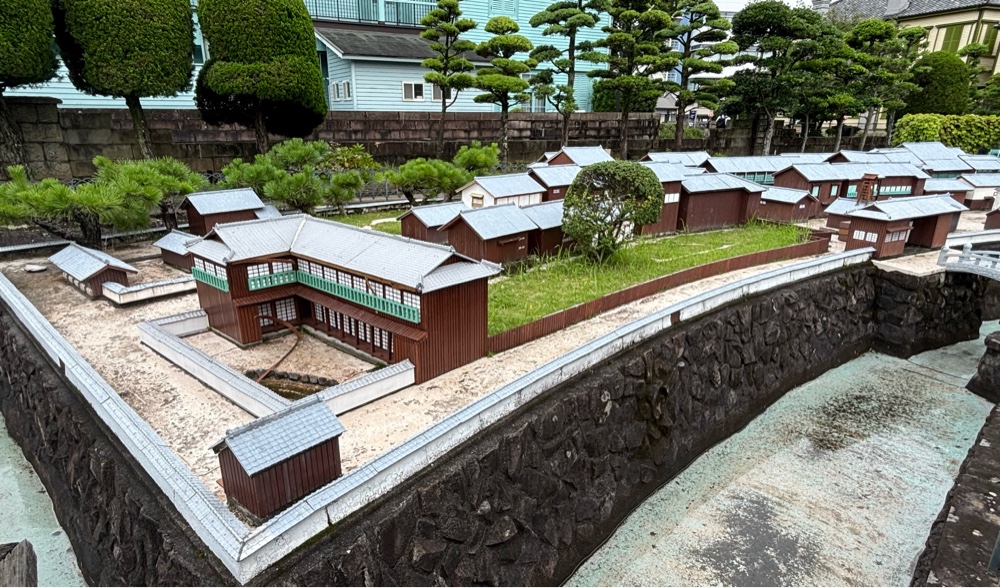
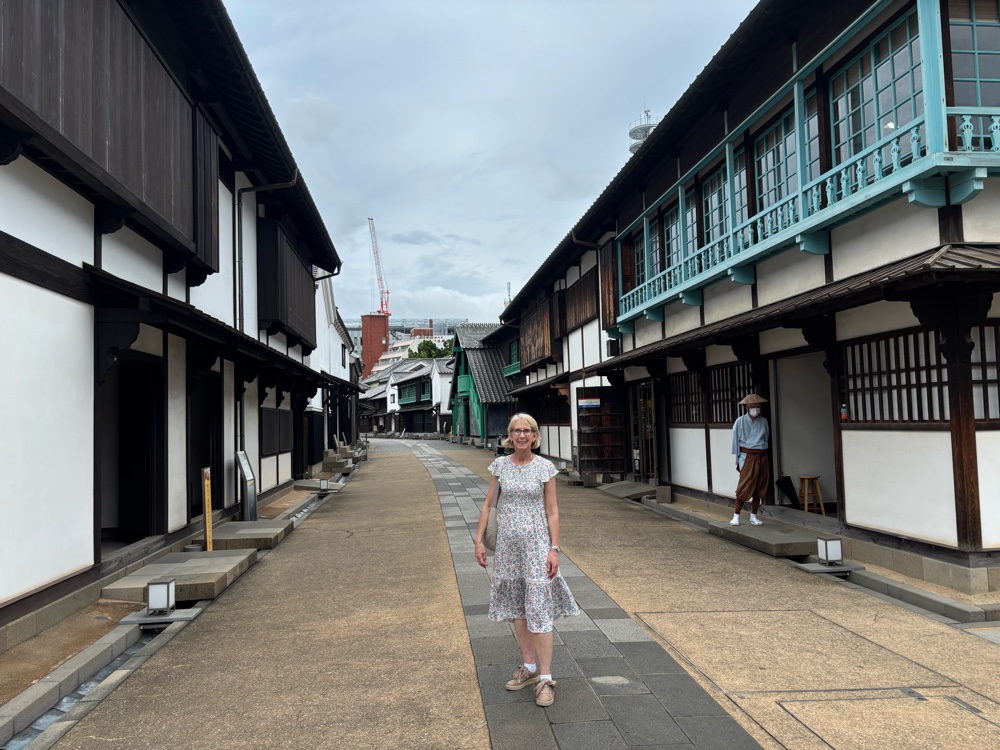
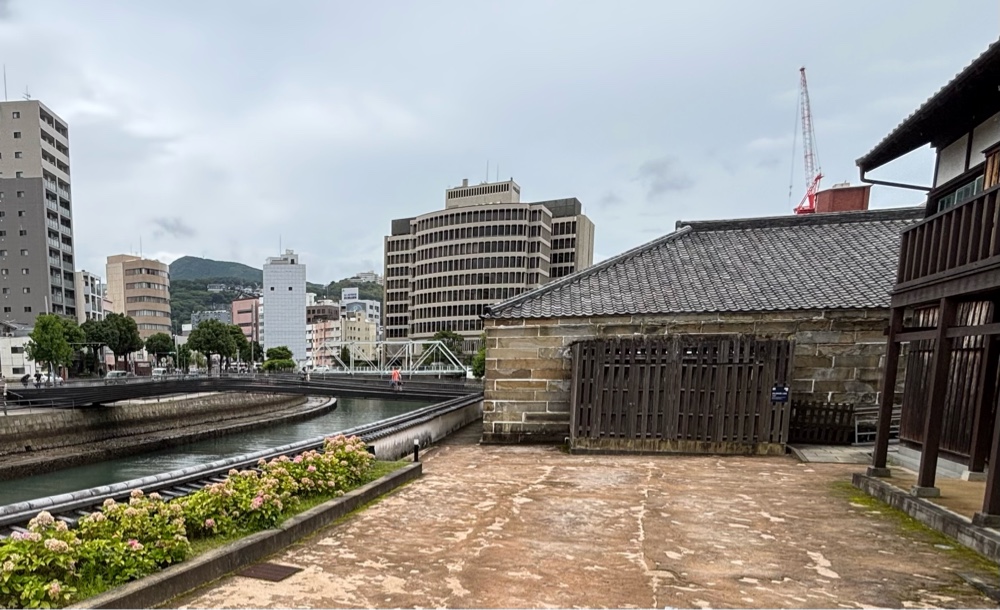
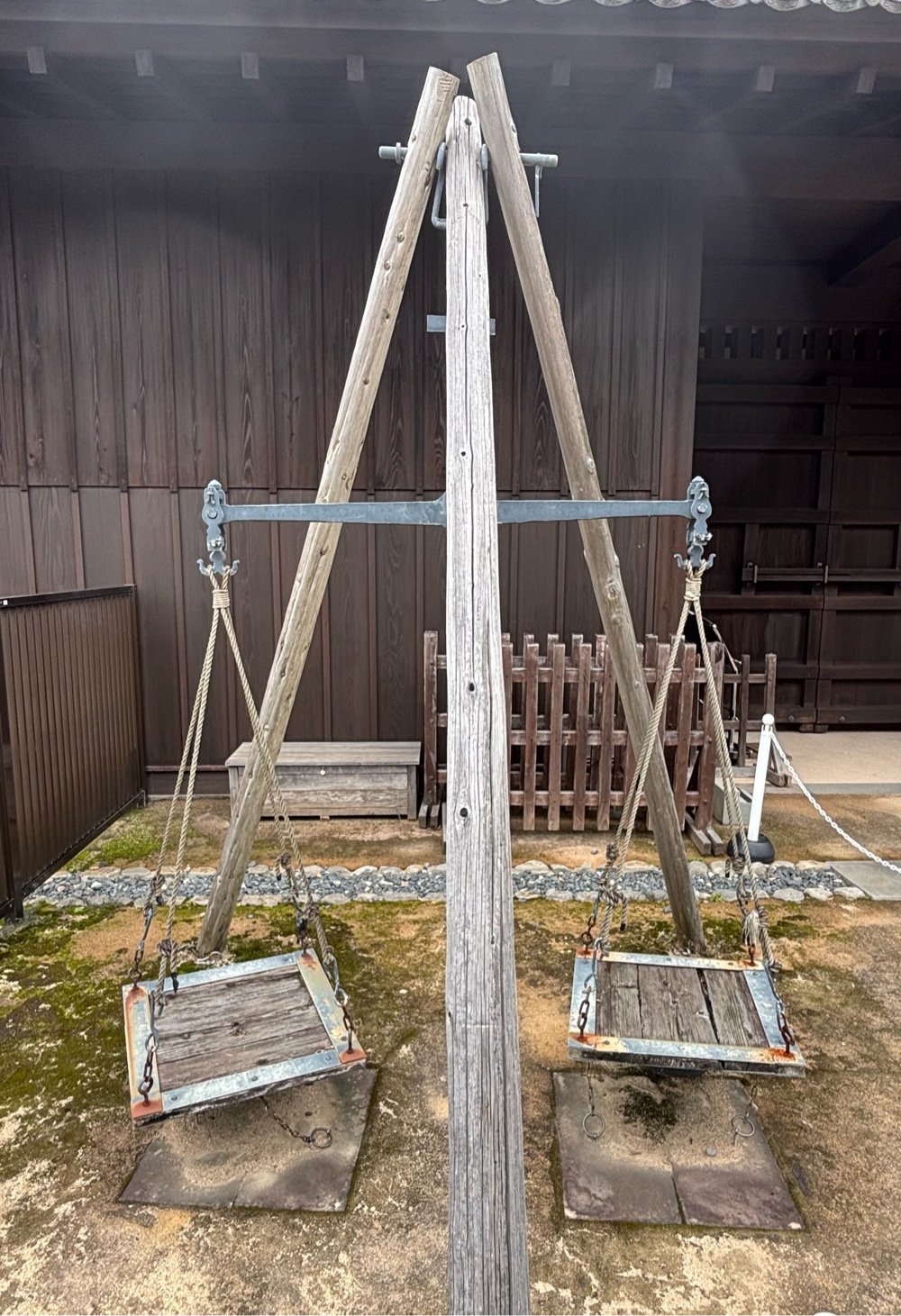
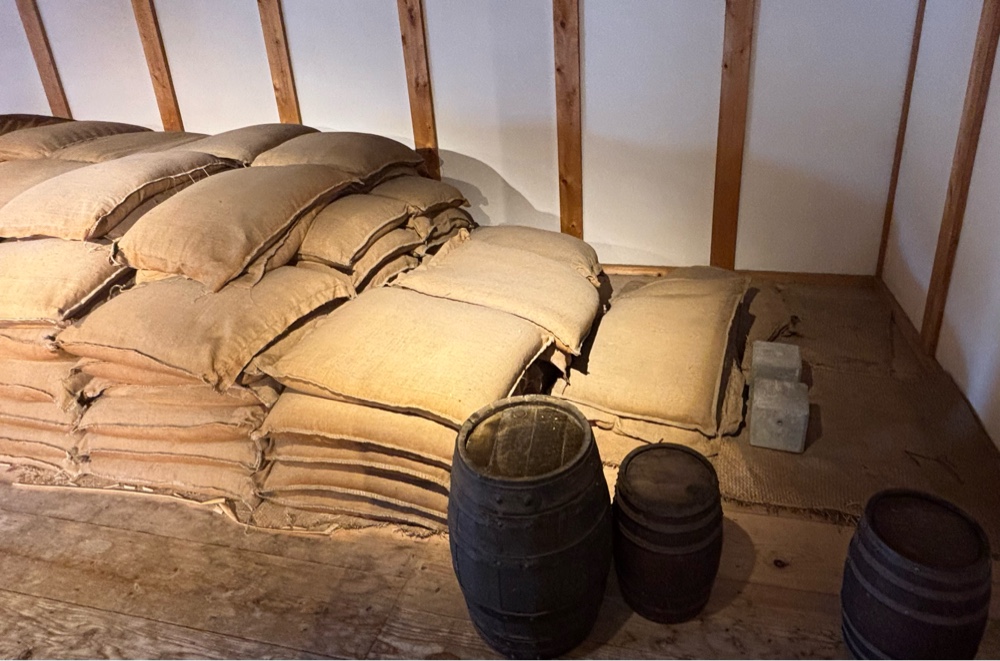
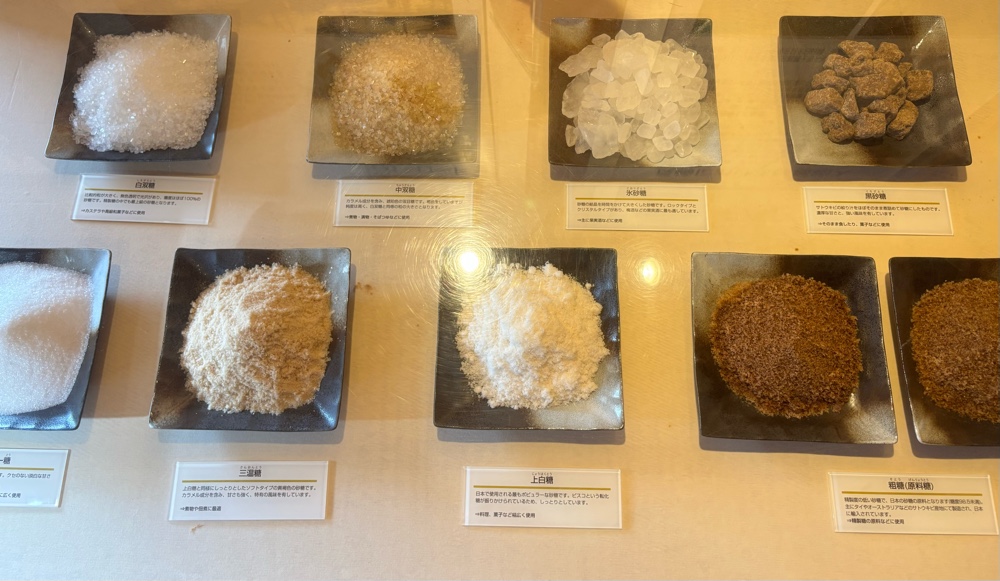
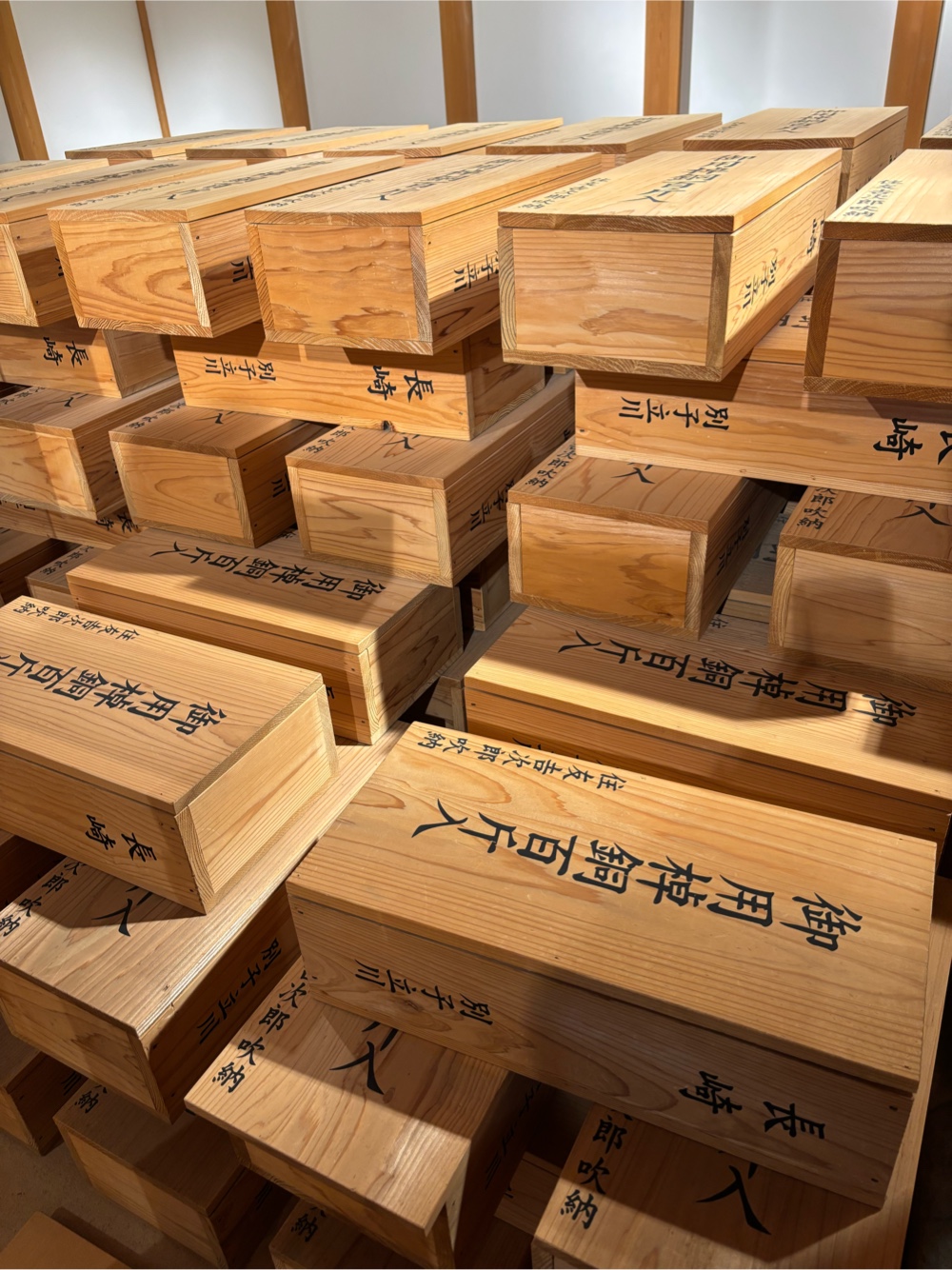
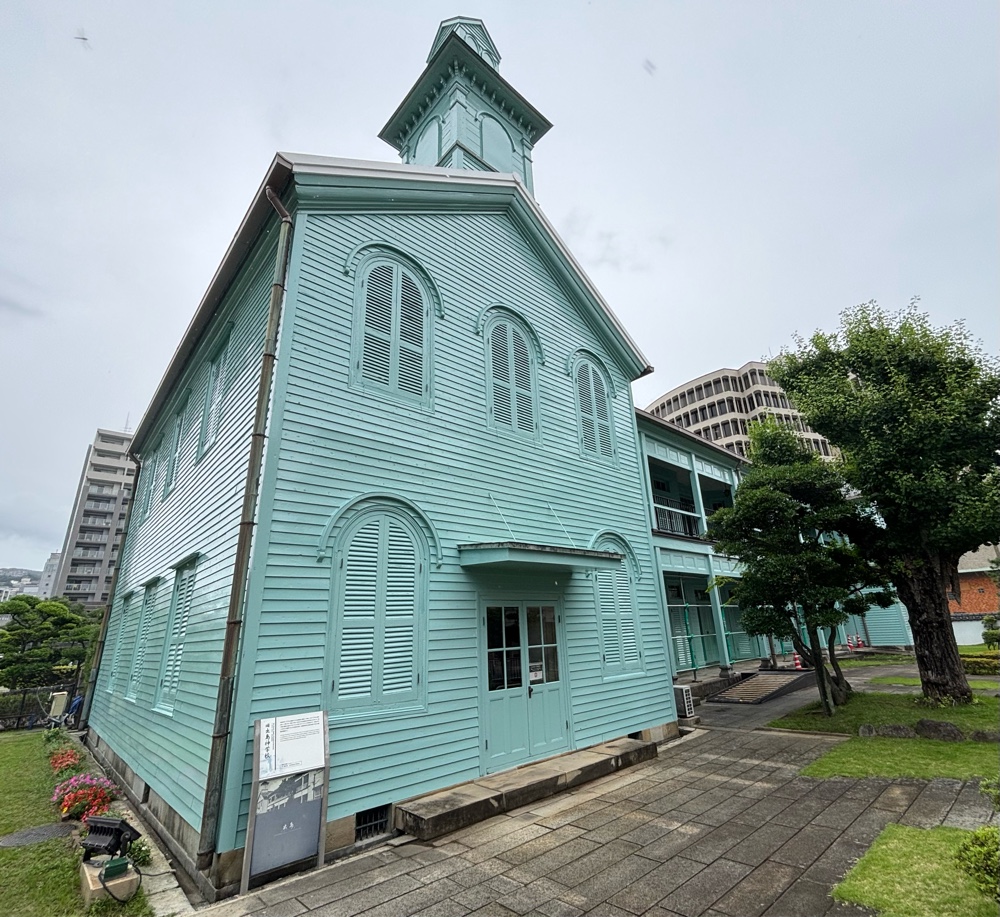
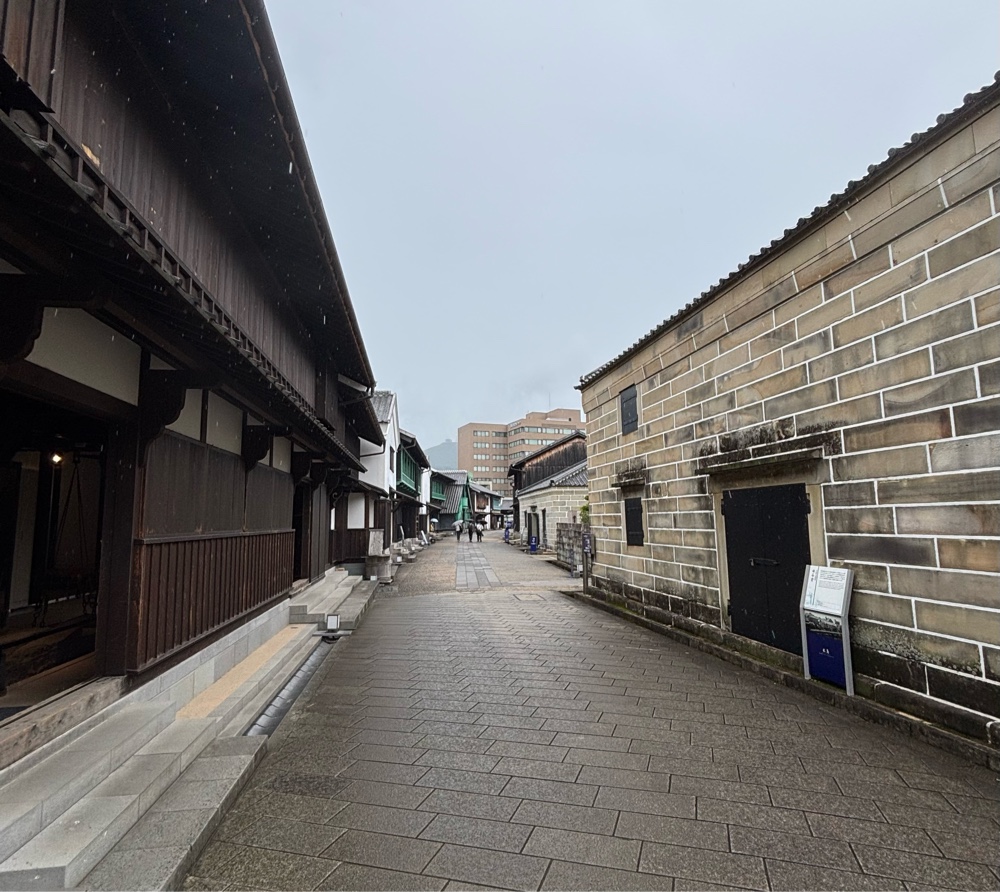
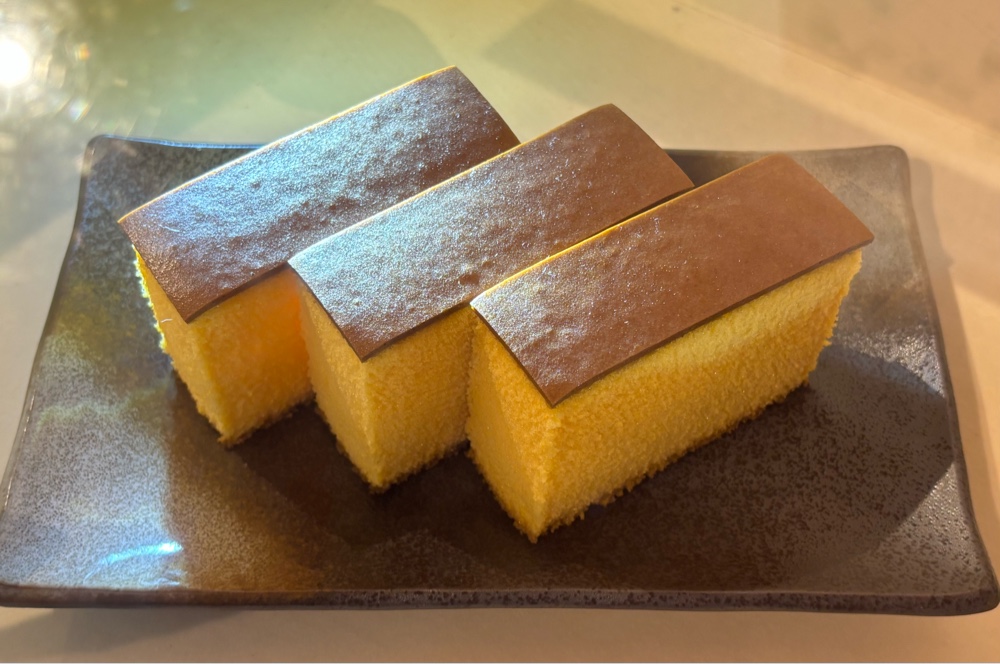
In the 1600s, a period of closure to the outside world descended upon Japan. One exception was a settlement of Dutch traders at the port of Nagasaki, who were allowed to continue trade. Their village, known as Dejima, has been beautifully rebuilt, showing the various goods traded both ways, between Holland and Japan. The Dutch imported lots of sugar, as one important example, which eventually resulted in Nagasaki becoming known for its sweets, which it learned about from the Portuguese. The Japanese traded copper with the Dutch, who were quite hungry for it.
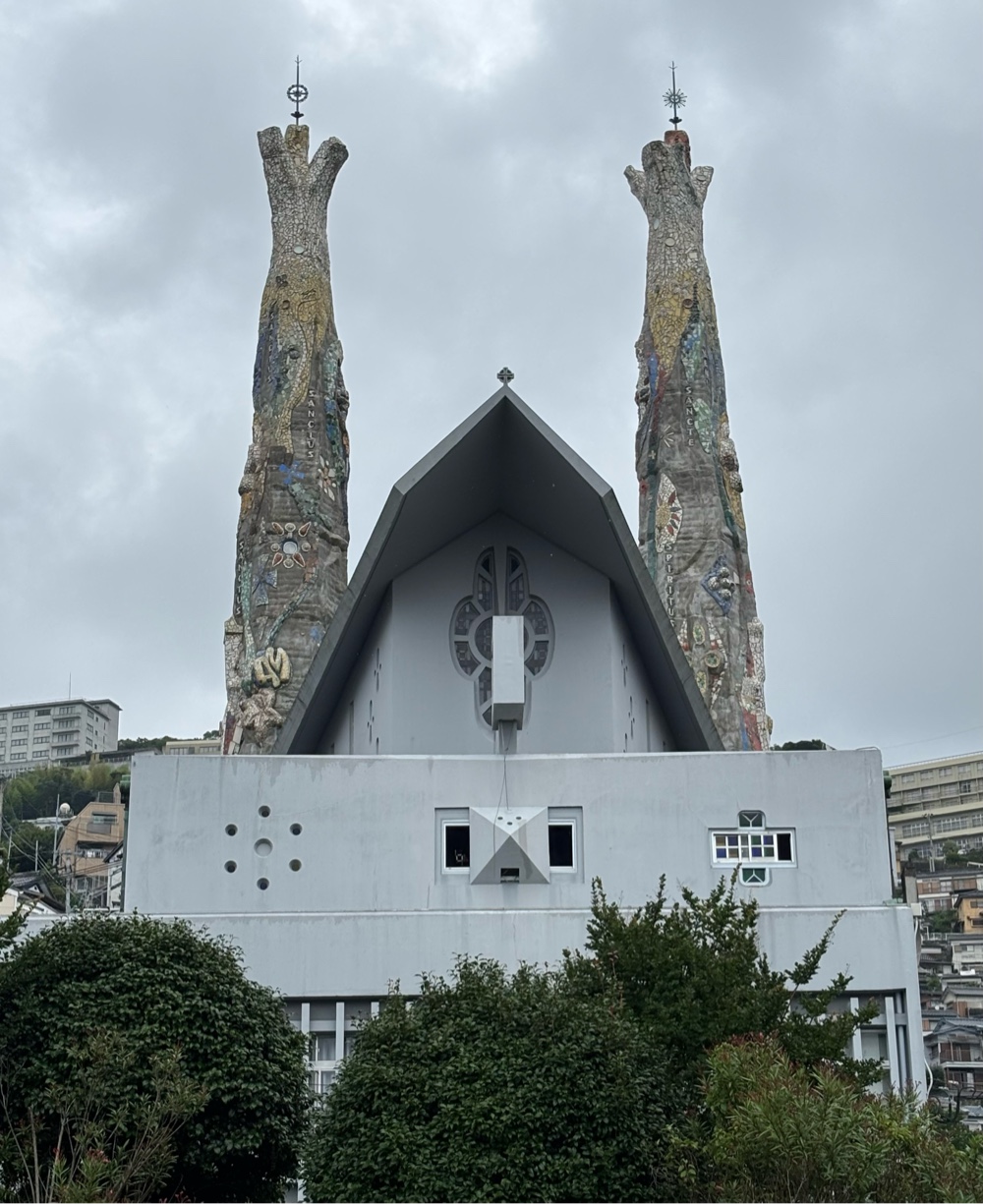
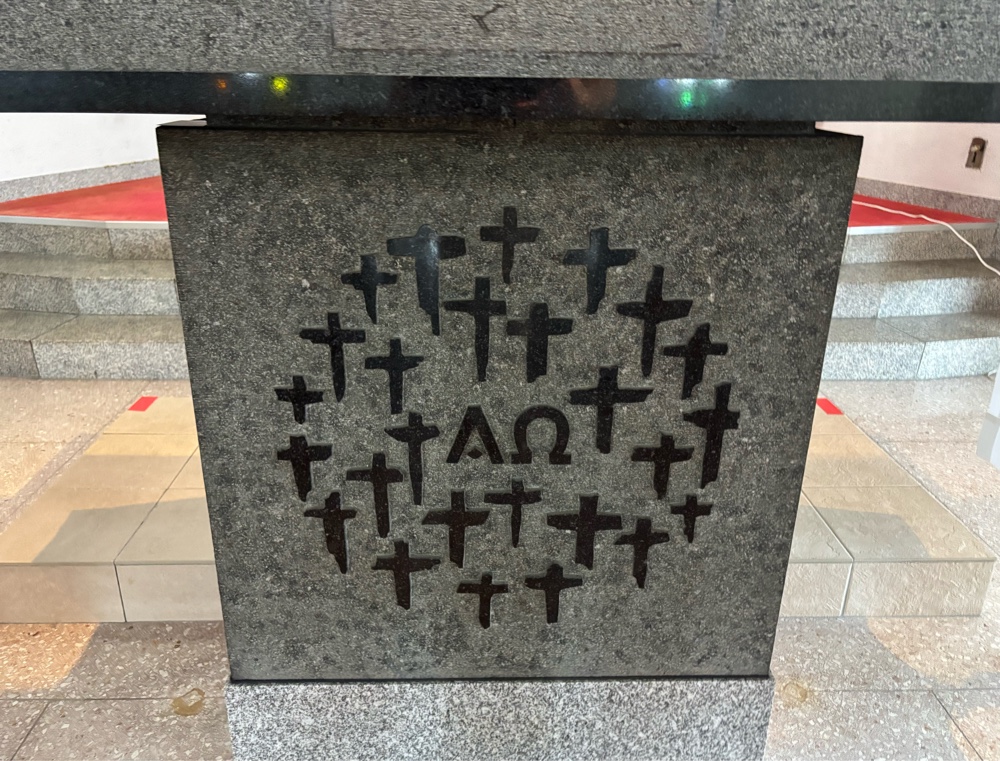
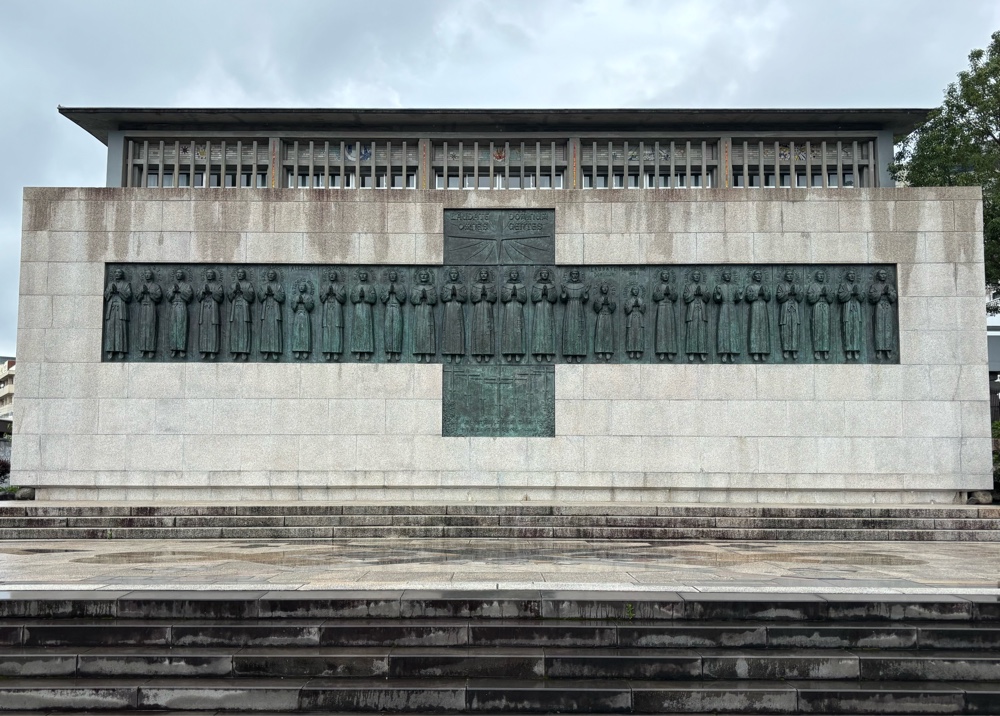
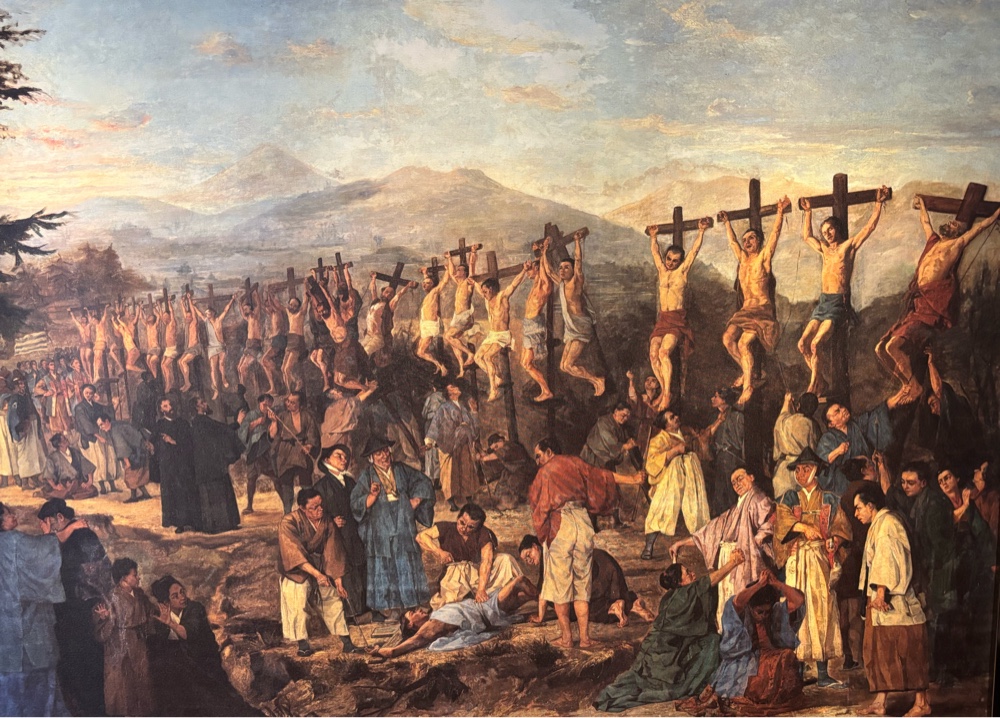
While Nagasaki has become know for the atomic bomb attack of 1945, it is also known for another searing tragedy: the crucifixion of 26 Christian men and boys in 1645. Twenty were Japanese (17 men and three boys) and six were from other countries. Th Shoguns did the crucifixions to discourage the growth of Christianity in Japan. It was followed by a brutal crackdown on Christians, which lasted until the mid-1800s. The crucifixions galvanized Christians in Japan at the time and added to their numbers. It also served to drive the Church underground for centuries.

Comments
Post a Comment